
How to Choose the Best Outdoor Armchair for Your Needs?
Choosing an Outdoor Armchair is less about chasing a showroom look and more about matching a chair to real daily use. Will it sit beside a sunny patio table, under a covered porch, or on a damp lawn? Measure the space, including room to pull the chair out. Then check seat height, depth, and arm width against the people who will use it. A few centimetres can change whether a long meal feels relaxed or awkward.
Outdoor furniture specialist Daniel Reed puts the principle this way: “Choose for the weather you have, and the way you actually sit.” Treat that as a practical reminder, not a substitute for checking product details. Look for clear information about the frame, fasteners, fabric, and care requirements. Aluminum is often light and easy to move; hardwood can feel substantial but may need regular maintenance. Cushion covers should be easy to remove and clean. Check the stated weather resistance, too. “Water-resistant” does not always mean suitable for constant rain.
If possible, sit in the chair before buying. Notice whether the front edge presses against your legs, and whether the arms meet your elbows naturally. No checklist catches everything. I once underestimated how much space a wide chair needed beside a narrow table; the arrangement looked good, but felt cramped. The guide below compares comfort, materials, durability, style, and price, helping you choose an Outdoor Armchair that works beyond the product photograph.
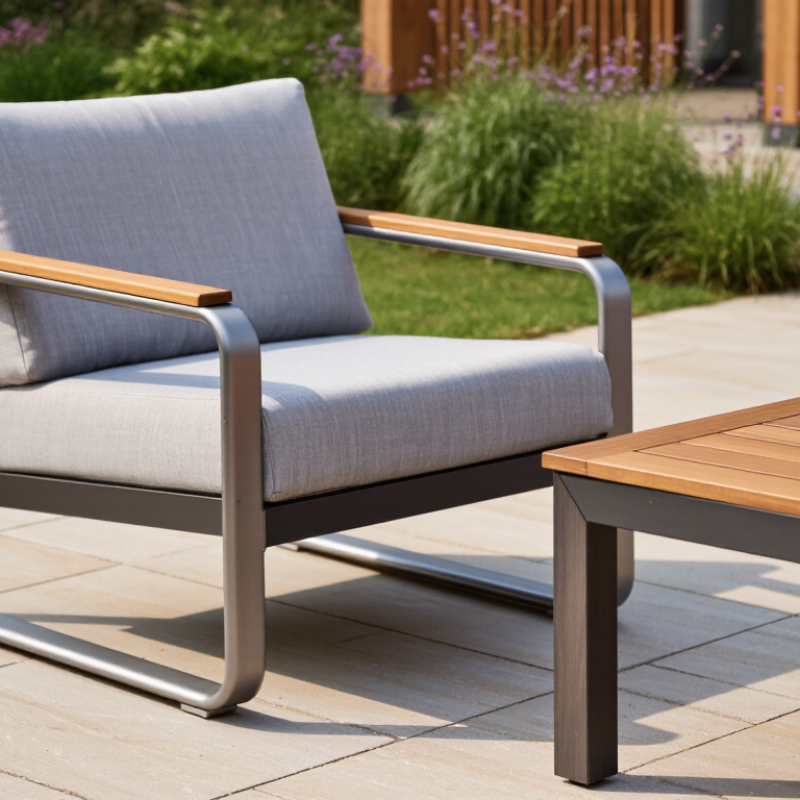
Identify How and Where the Armchair Will Be Used
Start with the chair’s daily job, not its appearance. Will it be a quiet reading seat, extra dining space, or a place to watch children play? A reading chair benefits from a comfortable recline and arms that support relaxed shoulders. For meals, a more upright seat makes it easier to reach a table. Measure the space with the chair pulled out, too; a walkway that looks generous on paper can feel tight in use.
Location changes what matters. On a small balcony, check the chair’s width and whether it can be moved easily for sweeping. In an exposed garden, look for a stable frame and materials suited to regular sun and rain. Near a pool, quick-drying surfaces can be more practical than thick cushions that stay damp. Check the ground as well. Uneven paving can make a lightweight chair wobble.
Think about care and storage before choosing upholstery. If cushions need to come indoors after every shower, consider whether that routine is realistic. Small detail. Measure doorways and storage space, not just the seating area. Even a careful plan can miss how often the chair will be moved; that is worth reconsidering before prioritizing a heavy, fixed design.
How to Choose the Best Outdoor Armchair for Your Needs? - Identify How and Where the Armchair Will Be Used
| How You’ll Use It | Typical Setting | Features to Prioritize | Practical Considerations |
|---|---|---|---|
| Relaxing and reading | Covered patio, porch, or sheltered garden corner | A comfortably reclined back, supportive arms, and a seat deep enough for relaxed sitting | Check that the chair fits the available space, including room to recline or add a footrest. Cushions should be removable for cleaning and storage. |
| Dining and everyday meals | Outdoor dining table or balcony eating area | An upright seat, a manageable width, and a seat height that works with the table | Compare the chair’s seat height with the table height before buying. Arms should slide under the tabletop if you plan to push the chair in. |
| Conversation and entertaining | Deck, patio, or outdoor seating group | A supportive back, comfortable armrests, and a design that can be arranged with other seats | Measure the layout and allow clear walkways. Lightweight chairs are easier to rearrange; heavier chairs may stay put better in exposed areas. |
| Small-space seating | Apartment balcony, compact porch, or narrow terrace | A compact frame, efficient footprint, and a shape that does not obstruct doors or routes | Measure the usable floor area, not just the wall-to-wall dimensions. Folding or stackable designs can simplify storage when the chair is not in use. |
| Use in an uncovered, rainy area | Open patio, lawn, or garden without a roof | Weather-resistant frame and finishes, quick-drying or removable cushions, and surfaces that are easy to clean | No outdoor material is maintenance-free. Follow care instructions, and store cushions during prolonged wet weather to help them dry thoroughly. |
| Use in a sunny location | South-facing deck, poolside area, or open garden | Materials and fabrics intended for outdoor exposure, plus a surface that remains comfortable to touch | Sunlight can fade fabrics and warm exposed surfaces. Consider shade placement and check the manufacturer’s care guidance for UV exposure. |
| Seasonal or occasional seating | Guest area, seasonal porch, or secondary garden space | Easy handling, straightforward assembly, and simple off-season storage | Check folded or stacked dimensions if storage space is limited. A protective cover can reduce exposure when the chair is not being used. |
| Frequent daily use | Main outdoor living area | A stable frame, durable joints, comfortable support, and replaceable or washable cushions | Review the stated weight capacity, assembly requirements, warranty terms, and recommended maintenance before purchase. |
Related Posts
-
China Top 10 Patio Deck Furniture Manufacturers?
-
How to Choose Telescope Outdoor Furniture for Your Business?
-
Top Outdoor Furniture Manufacturers for Global Buyers
-

10 Best Quality Patio Furniture Sets for 2026
-
Global Excellence in Outdoor Furniture Crafted in China for International Markets
-
10 Tips for Choosing the Best Outdoor Furniture