China Top Outdoor Patio Furniture Suppliers
China is a major sourcing destination for outdoor furniture, with suppliers offering designs that range from simple metal dining sets to modular lounge seating. For buyers, the challenge is not just finding a low price. It is identifying a supplier whose materials, production capabilities, and communication fit the project. The term Outdoor Patio can cover very different needs, from compact balcony chairs to large hospitality installations. Details matter. A woven chair may look convincing in a catalogue, yet its frame, finish, and weave determine how it performs outdoors.
This guide to China’s top outdoor patio furniture suppliers will help buyers compare options with practical questions in mind. It considers product range, customization, materials, sample evaluation, packaging, and lead-time communication. Look closely at welds, joints, drainage, fabric specifications, and the finish on metal parts. Ask how products are tested and maintained, and request clear answers rather than relying on attractive product photos. A sample can reveal useful details, though one sample cannot guarantee every production run will match. Weather exposure also varies, so claims about durability should be checked against the intended setting and care requirements. Supplier rankings and capabilities can change; verify current details directly before placing an order. Not every detail is obvious. A careful comparison takes time, but it can help buyers choose a partner suited to their design, budget, and delivery needs.

Overview of China’s Outdoor Patio Furniture Supplier Industry
China’s outdoor patio furniture industry brings together specialist workshops, larger export manufacturers, and trading companies. Production is concentrated in coastal manufacturing regions, where suppliers can source aluminum frames, steel components, woven resin, and outdoor fabrics. Capabilities vary widely. Some factories focus on metal welding, while others coordinate several materials and assembly steps.
Many suppliers offer custom dimensions, finishes, cushion fabrics, and packaging for overseas buyers. A useful review goes beyond catalogue photos. Ask for frame-wall thickness, coating details, fabric specifications, and clear assembly instructions. Check whether sample joints sit evenly and whether water can drain from hollow sections. Small details matter.
The supply chain can support both large orders and smaller trial runs, but lead times depend on materials, customization, and seasonal demand. A polished sample does not guarantee every production batch will match it. Request dated specifications and inspect finished goods against agreed measurements. It takes extra time. Outdoor furniture also involves trade-offs: heavier frames may feel steadier, while lighter pieces are easier to move but can feel less substantial. No single material suits every climate or use.
Main Types of Patio Furniture and Materials Offered
Outdoor patio furniture commonly includes dining sets, lounge chairs, sofas, benches, and compact bistro tables. Dining sets suit meals and larger patios; lounge chairs and sofas create relaxed seating zones. Folding chairs and stackable pieces help when storage is limited. Sizes matter: leave room for doors and walking paths, or a beautiful set can feel awkward in daily use.
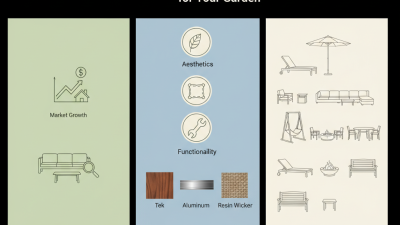
Material choice affects weight, upkeep, and how furniture ages. Aluminum frames are light and resist rust, while steel feels sturdy but depends on good protective finishing. Teak and other durable hardwoods offer a warm surface; without regular oiling, they may weather to gray. Synthetic wicker over a stable frame is easy to clean, though strong sun can fade some fibers. Cushions benefit from quick-drying foam and removable covers. Even a well-made material may be a poor fit for a windy, exposed balcony.
Tips: Check joints, welds, drainage holes, and fabric seams before ordering. Request dimensions and care instructions, not just product photos. Leave samples outside for a day; colors can shift in bright light. Small patios need restraint. A crowded layout is easy to regret.
China Outdoor Patio Furniture: Common Types and Materials
Typical outdoor weather suitability by material, rated on a qualitative 1–5 scale (5 = very suitable). Actual performance depends on product construction, finish, climate, and care. This is an illustrative material comparison, not a supplier survey.
How to Evaluate Chinese Patio Furniture Suppliers
Evaluating Chinese Patio Furniture Suppliers
China’s patio furniture sector serves a market where material performance matters as much as price. Grand View Research estimated the global outdoor furniture market at USD 50.91 billion in 2023, with continued growth projected through 2030. That demand makes supplier selection harder, not easier. A polished catalog proves little.
Ask for traceable specifications: aluminum alloy grade, frame-wall thickness, coating system, fabric composition, and foam density. Then compare them with a production sample. Check welds around chair joints, coating coverage beneath table edges, and whether woven strands loosen under tension. A sample can still mislead. Request batch inspection records and confirm how the factory handles changes between sample approval and mass production. Do not treat a quality certificate as proof that every patio set will meet your requirements.
Evaluate testing against the product’s actual use. Request dated reports for corrosion, UV exposure, load capacity, and fabric colorfastness, and verify that model numbers match your quotation. Ask how cartons protect furniture from corner impacts and moisture; inspect the packaging, not just the product. Factory video calls can reveal equipment and workflow, but they cannot replace an independent inspection. I would also compare lead-time promises with documented production capacity. That check is easy to skip—and worth revisiting.
Manufacturing Standards, Quality Control, and Customization
China’s outdoor patio furniture suppliers should be assessed by how consistently they control materials and production, not by catalog photos alone. Ask how aluminum tube thickness, weld quality, fasteners, and protective finishes are checked. A sound inspection can include frame measurements, joint review, coating adhesion checks, and load testing on representative chairs. For coastal use, ask whether corrosion resistance is tested and how results are recorded. Details matter.
Quality control works best at several stages: incoming materials, in-process assembly, and final packing. Request inspection criteria and sample records, then compare them with the approved product sample. A smooth finish is useful, but it cannot reveal weak joints. Nor does one passing sample prove every batch is consistent. This is where buyers should remain skeptical.
Customization may cover dimensions, fabric colors, cushion density, finishes, or packaging. Each change can affect fit, durability, and production timing. Confirm material specifications, color references, tolerances, and sample approval in writing before mass production. Keep one signed reference sample when possible. Small changes can be missed. A slightly different weave or coating shade may seem minor, yet it can complicate repeat orders. Suppliers should explain what they can reproduce reliably, and buyers should leave room for a few imperfect decisions during development.
Sourcing, Shipping, and Import Considerations
China Top Outdoor Patio Furniture Suppliers
Reliable sourcing starts with a clear specification, not a low quote.
Define frame material, fabric grade, dimensions, load capacity, and finish before comparing suppliers. Ask for production timelines, carton sizes, and recent test reports. Check welds, drainage holes, and sharp edges on physical samples. Small details matter. For coastal use, request corrosion testing and confirm the care instructions. A perfect sample is not a guarantee; production batches can differ, so agree on inspection criteria before manufacturing begins.
Shipping costs and schedules need their own checks.
UNCTAD’s Review of Maritime Transport 2024 reported sharp container-rate increases during the first half of 2024. Shanghai-to-Europe spot rates rose from about $1,200 per 40-foot container in early December 2023 to more than $4,000 in early June 2024. Spot rates are not a landed-cost quote. Request a written estimate that separates freight, insurance, port charges, and inland delivery. Confirm who handles export clearance and which Incoterms apply. Before ordering, verify the destination country’s tariff classification, duty rate, and labeling requirements with a qualified customs broker. Prepare the commercial invoice, packing list, and bill of lading details early. It still happens: small document errors can delay a container.