What Are the Top Marble Floor Tile Types in 2026?
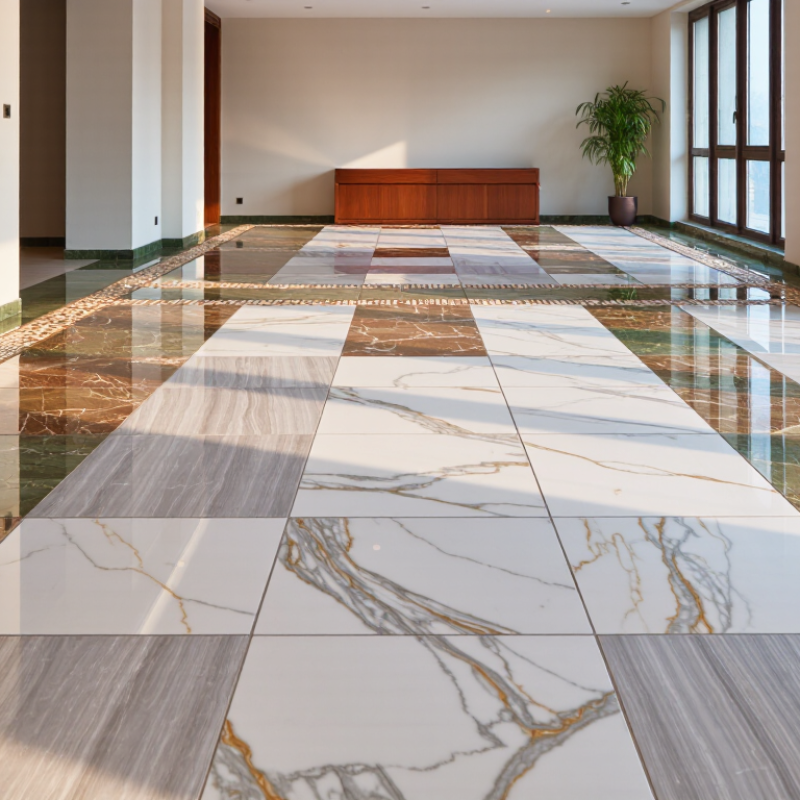
Marble floors are not one look or one performance profile. In 2026, the strongest choices range from softly veined Carrara and dramatic Calacatta to richly colored, honed varieties and small-format mosaics. Each changes the room differently. A polished tile catches light across a hallway; a honed finish feels quieter underfoot, but may show marks in another way.
The U.S. Geological Survey’s 2025 Mineral Commodity Summaries tracks dimension stone as a distinct mineral-material category, offering useful context for an industry shaped by quarrying and construction demand. The report does not rank residential tile styles, though. That matters: popularity alone cannot tell you whether a stone suits a busy kitchen, a small bathroom, or a sunlit entry. For this Floor Tiles Marble guide, we compare appearance, finish, format, maintenance, and practical use—not just showroom appeal.
Architect Ludwig Mies van der Rohe’s well-known design maxim, “God is in the details,” is especially apt here. Vein direction, grout color, tile size, and surface finish can change the whole floor. A small sample helps. Sometimes it also disappoints.
The sections ahead examine the leading marble tile types, their defining features, and where each may work best. Natural stone varies from tile to tile, so expect variation rather than perfect repetition. That is part of its character—and, at times, a decision worth reconsidering before installation.
What Defines a Marble Floor Tile Type?
What Are the Top Marble Floor Tile Types in 2026?
What Defines a Marble Floor Tile Type?
A marble floor tile type is defined by more than its color. The stone’s mineral composition, veining, origin, and surface finish all affect its appearance and practical use. Some tiles show fine, quiet veins; others have bold bands or scattered mineral marks. These differences are natural, so two tiles from the same batch may not match exactly.
Finish is another key distinction. Honed marble has a soft, matte surface that can make small scratches less obvious. Polished marble reflects light, but its smooth surface may become slippery when wet. Tumbled finishes have softened edges and a slightly aged look. Looks are not enough. For a bathroom or entryway, consider moisture, foot traffic, and how much upkeep you can manage.
Size and cutting also shape a tile’s type and feel. Large-format pieces create fewer grout lines, while mosaics can suit curved areas and detailed layouts. Before choosing, inspect several samples together under the room’s lighting. A single sample rarely shows the full range of veining, and that can be disappointing after installation. No finish makes marble maintenance-free; sealing needs and cleaning routines vary by stone and use.
Which White Marble Varieties Stand Out in 2026?
White marble stands out in 2026 through contrast, not whiteness alone. Carrara usually has a soft gray background and fine, feathery veining, making it forgiving in small bathrooms and busy kitchens. Calacatta and Statuario show bolder veins against brighter fields; large slabs let those patterns read clearly across a floor. Thassos offers a cleaner, more uniform white, but its polished surface can reveal dust and water marks quickly. Small sample, big lesson.
The U.S. Geological Survey’s 2025 Mineral Commodity Summaries estimated U.S. dimension-stone production value at about $430 million for 2024. That figure covers multiple stone types, not white marble alone, so it cannot prove which variety is most popular. It does underline the value of checking provenance and specifications rather than relying on a dramatic showroom sample. For floors, ask suppliers for the stone’s absorption and wear data, then inspect several tiles under the room’s actual lighting. Veining varies from tile to tile. That variation can feel beautiful—or unexpectedly busy. Honed finishes soften glare and show less surface reflection, while polished marble brings stronger color but may become slippery when wet.
What Are the Top Marble Floor Tile Types in 2026? - Which White Marble Varieties Stand Out in 2026?
| Marble variety | Common origin | Typical appearance | Veining character | Popular floor finishes | Practical notes |
| Carrara | Italy | White to soft gray background, often with a cool cast | Fine, diffuse gray veining; usually moderate contrast | Honed, polished, or brushed | A widely used, versatile option. Like other marble, it can etch from acids and benefits from sealing. |
| Calacatta | Italy | Bright white to warm white background | Bold, broad gray or gold-toned veins; patterns vary by slab | Polished for definition; honed for a softer look | Distinctive veining makes each selection individual. Review full slabs or tile batches for pattern consistency. |
| Statuario | Italy | Clean, luminous white with occasional subtle warmth | Dramatic, well-defined gray veining, often with open white areas | Polished or honed | A statement-making choice. Natural variation is pronounced, so tile layout planning is useful. |
| Thassos White | Greece | Very bright white, often with a fine crystalline appearance | Usually minimal or nearly absent | Honed, polished, or brushed | Creates a clean, uniform look, though natural shade variation can still occur between pieces. |
| Bianco Dolomiti | Italy | White to light gray, sometimes with a gentle beige undertone | Soft gray lines and cloudy movement, typically low to moderate contrast | Honed or polished | A restrained alternative to strongly veined white marbles; inspect samples under the room’s lighting. |
| Volakas | Greece | White or creamy white, sometimes with pale pink or beige areas | Gray, taupe, or subtle warm-toned veins with variable movement | Honed, polished, or brushed | Its warmer variation pairs well with neutral interiors; color and veining can differ noticeably by lot. |
| Arabescato | Italy | White to pale gray background | Distinctive looping or network-like gray veining | Honed or polished | The patterned surface adds visual movement. Check tile alignment and layout before installation. |
Selection note: Marble is a natural stone, so color and veining vary from piece to piece. It is relatively soft and can be scratched or etched by acidic substances; use a suitable stone sealer and a pH-neutral cleaner, and follow the installer’s care guidance.
How Do Beige, Brown, and Dark Marble Tiles Compare?
Beige marble makes a room feel brighter, especially when soft veining catches morning light. Brown marble brings warmth and hides everyday dust more readily, though busy patterns can compete with wood grain. Dark marble creates sharp contrast, but pale limescale and crumbs show quickly. Color is not a durability rating. The U.S. Geological Survey lists calcite at 3 on the Mohs hardness scale, and calcite is a major component of many marbles. So a dark tile is not automatically harder than a beige one.
For a fair comparison, request test results for the specific stone, not just its color name. ASTM C97/C97M measures water absorption and density; ASTM C880 measures flexural strength. The Natural Stone Institute’s Dimension Stone Design Manual also emphasizes selecting stone for its intended use and following suitable care practices. In a bathroom, absorption and finish deserve extra attention. In a hallway, surface wear and slip resistance matter more. Sealed beige stone can still stain. Dark stone can still etch from acidic spills. I would compare sample tiles under the room’s actual lighting, then check the supplier’s test data. A small sample can mislead, though; veining changes across a full floor.
How Do Beige, Brown, and Dark Marble Tiles Compare?
Marble generally has a Mohs hardness of about 3–4. Color alone does not determine hardness, so these ranges are a general guide—not a performance ranking of color families.
When choosing marble flooring, compare the specific stone’s finish, sealing needs, and care requirements; beige, brown, and dark shades can each vary by quarry and stone.
How Do Marble Tile Finishes and Formats Differ?
Marble floor tiles differ as much by finish as by stone type. Polished marble reflects window light and makes veining stand out, but it can show footprints and feel slippery when wet. Honed marble has a soft, matte surface that suits busy rooms, though spills may need prompt attention. Brushed finishes add subtle texture. They can also collect dust in deeper surface variations.
Tips: View a sample in your room’s daylight and evening lighting. A small sample can mislead. Check its slip rating and care guidance before choosing, especially for bathrooms or entryways.
Tile format changes the room’s visual rhythm. Large squares create fewer grout lines and a quieter look, but uneven floors may make installation harder. Smaller mosaics follow curves and provide more grout for traction. Rectangles can form a classic running-bond pattern or a modern grid. Grout color matters: a close match softens the pattern, while contrast highlights each edge. Marble varies naturally, so lay out several tiles before installation. That variation can feel uneven at first, yet it gives the floor its distinct character.
