
Top 10 Cotton Double Sleeping Bags for Couples?
Outdoor camping brings two people close to nature—and sometimes close to a cold, damp tent floor. The Outdoor Foundation’s 2024 Outdoor Participation Trends Report estimated that 175.8 million Americans took part in outdoor recreation in 2023. That figure describes broad participation, not demand for double sleeping bags, but it shows why practical camping gear matters to many people.
A Cotton Double Sleeping Bag can feel soft and familiar against the skin, especially during mild-weather trips. But cotton is not automatically the best choice for every couple. It can absorb moisture and take longer to dry than many synthetic fabrics. Pack size, insulation, zipper layout, and each sleeper’s room to move matter too. Small details matter.
Temperature claims deserve careful attention. EN ISO 23537-1 sets requirements for sleeping-bag performance and labeling, offering a useful reference when comparing products. Still, a laboratory rating cannot predict every camper’s comfort. Clothing, sleep habits, tent conditions, and cold sensitivity all affect the night. That is one limitation worth keeping in view.
This guide compares ten cotton double sleeping bags for couples, focusing on material details, dimensions, closure design, care instructions, and stated temperature ratings. Where product specifications are available, they help ground the comparison; they do not replace hands-on testing. A roomy bag may feel inviting at home, yet prove bulky on a long hike. Our picks aim to make those trade-offs clearer, rather than promise one perfect bag for every trip.
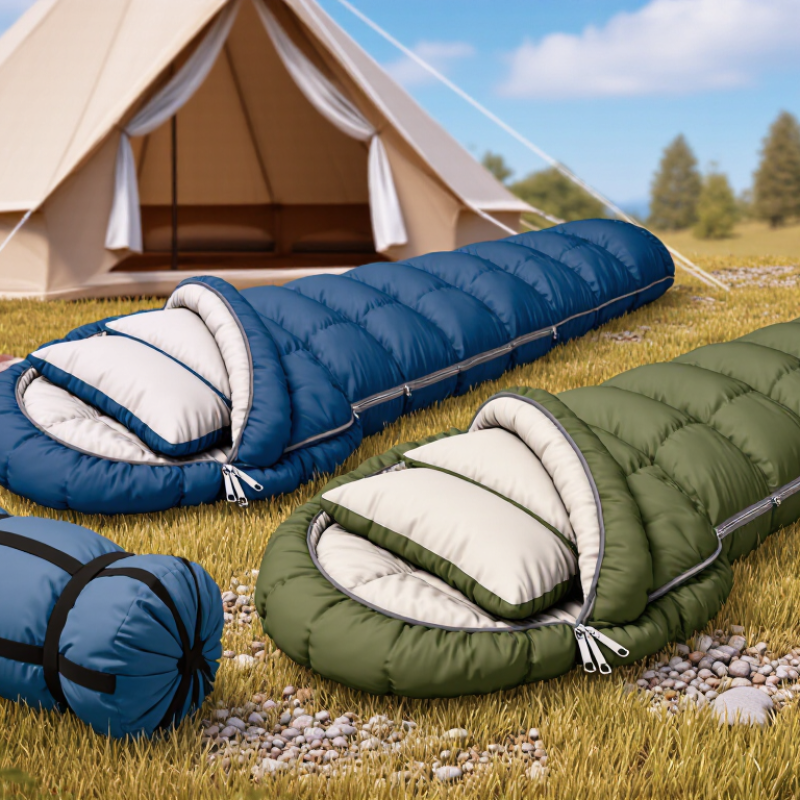
What Defines a Cotton Double Sleeping Bag for Couples?
A cotton double sleeping bag for couples is designed to give two people room to sleep under one shared cover. Cotton usually refers to the lining, not necessarily the entire bag. A soft cotton lining feels familiar against the skin, but it does not automatically make a bag warmer. Check the insulation, shell fabric, and temperature guidance for the conditions you expect.
Width matters. A narrow bag can pull tight when both sleepers turn, while an oversized one may leave cold air pockets. Look for a shape that allows movement without excessive empty space. Two-way zippers can help each person adjust ventilation. A draft flap along the zipper adds comfort on chilly nights. Cotton can hold moisture and take longer to dry, so weight and packing size deserve attention too. It is an easy detail to overlook.
Tips: Compare the bag’s stated temperature range with your actual campsite conditions. Try lying side by side in similar layers before a trip. If either sleeper runs cold, bring separate blankets or sleep layers.
Materials and comfort are only part of the choice. Check whether the bag fits your tent and sleeping pads, especially near the shoulders and feet. Some couples prefer one shared bag; others sleep better with separate covers. There is no perfect setup for everyone, and the fit can feel different after a full night.
Top 10 Cotton Double Sleeping Bags for Couples: What Defines One?
A cotton double sleeping bag is generally a two-person sleeping bag with a cotton or cotton-flannel lining. The profiles below compare common styles rather than specific branded products; dimensions and weights are indicative ranges, since actual specifications vary by model.
| Rank | Double Sleeping Bag Profile | Typical Size (L × W) | Typical Materials | Best-Suited Conditions | Approx. Weight | Why Couples May Choose It | What to Check Before Buying |
|---|---|---|---|---|---|---|---|
| 1 | All-Round Cotton-Lined Double | 190–200 × 140–150 cm | Polyester shell; cotton or cotton-flannel lining; synthetic insulation | Car camping and mild-weather trips | 2.5–4.0 kg | A practical balance of shared space, comfort, and everyday usability. | Confirm the temperature rating, packed dimensions, and whether the rating applies to two occupants. |
| 2 | Wide-Comfort Double | 190–205 × 150–165 cm | Polyester shell; cotton-rich lining; synthetic insulation | Roomy car-camping setups | 3.0–4.8 kg | Extra width can make turning and sleeping side by side more comfortable. | Check the usable interior width; advertised outer dimensions may include seams and loft. |
| 3 | Flannel-Lined Double | 190–200 × 140–155 cm | Polyester shell; brushed cotton-flannel lining; synthetic insulation | Cool evenings in campsites or cabins | 3.0–5.0 kg | The soft, brushed lining feels comfortable against the skin. | Flannel adds bulk and weight; check wash-care instructions and drying time. |
| 4 | Two-Way-Zip Double | 190–200 × 140–155 cm | Polyester shell; cotton or flannel lining; synthetic fill; dual zippers | Variable mild conditions | 2.8–4.5 kg | Separate zipper controls can help each sleeper adjust ventilation. | Look for zipper guards and check that the zippers open independently from the top and bottom. |
| 5 | Convertible Zip-Together Pair | Each bag: about 190–200 × 70–80 cm; joined width varies | Polyester shells; cotton or flannel linings; synthetic insulation | Couples who sometimes sleep separately | About 2.5–4.5 kg per pair | Two compatible bags can be used together or separately when the zipper design allows it. | Confirm zipper compatibility, orientation, and whether both bags are included. |
| 6 | Rectangular Cotton-Lined Double | 190–200 × 140–155 cm | Polyester shell; cotton lining; synthetic insulation | Warm-weather camping and indoor use | 2.0–3.5 kg | The roomy rectangular shape offers more freedom of movement than a tapered design. | Rectangular designs may retain less warmth around the feet; check the stated comfort rating. |
| 7 | Hooded Double Bag | 190–205 × 140–155 cm | Polyester shell; cotton or flannel lining; synthetic insulation; shared or split hood | Cooler nights when extra head coverage is useful | 3.0–5.0 kg | A hood can help reduce heat loss around the head and neck. | Check whether the hood fits one or both sleepers and whether it can be adjusted independently. |
| 8 | Lightweight Cotton-Lined Double | 190–200 × 135–150 cm | Lightweight polyester shell; cotton-blend lining; synthetic insulation | Summer trips and short carries from a vehicle | 1.8–3.0 kg | Lower weight is convenient when a full-size heavy flannel bag is unnecessary. | “Lightweight” does not guarantee a small packed size; compare packed volume and insulation details. |
| 9 | Roomy Rectangular Double with Draft Tube | 195–205 × 145–160 cm | Polyester shell; cotton or flannel lining; synthetic insulation; zipper draft tube | Cool-weather car camping, subject to its tested rating | 3.5–5.5 kg | A draft tube can help limit cold air entering along the zipper. | Compare the bag’s tested temperature rating with expected overnight lows; do not rely on fill alone. |
| 10 | Double Bag with Removable Liner | 190–200 × 140–155 cm | Polyester shell; removable cotton or cotton-blend liner; synthetic insulation | Frequent camping where easier cleaning is a priority | 2.5–4.5 kg | A removable liner can be easier to air out or wash than the full insulated bag. | Check whether the liner is included, how it attaches, and which components are machine washable. |
What defines a cotton double sleeping bag for couples? It combines a two-person sleeping area with a cotton or cotton-flannel lining. The shell and insulation are often synthetic, so “cotton” may describe only the lining—not the entire bag. Temperature ratings, dimensions, and weights are model-specific; use the manufacturer’s tested rating and care instructions when comparing actual products.