What Are the Top 10 Marine Induction Cooker Suppliers?
Choosing a Marine Induction Cooker supplier involves more than comparing prices or checking a product photo. On a working boat, salt air, vibration, limited counter space, and available electrical capacity all affect the choice. A sleek unit may look suitable in a showroom but prove awkward in a compact galley. Small details matter. Buyers should check mounting options, rated voltage, cooking-zone dimensions, ventilation requirements, and access to replacement parts. These practical points are easy to overlook.
This guide looks at ten suppliers and the questions that can help distinguish their offerings. It considers product range, published technical specifications, customization options, warranty terms, and the clarity of after-sales support. Claims of marine experience are useful, but buyers should ask what evidence supports them, such as installation references or product documentation. No supplier is the right fit for every vessel. A small sailing boat and a larger commercial craft may have very different space and power needs. Supplier portfolios and service coverage can also change, so details should be confirmed directly before purchase. Even a well-organized comparison cannot replace checking compatibility with the vessel’s electrical system. That is worth admitting. The goal is not to declare a universal winner, but to give readers a grounded starting point for comparing Marine Induction Cooker suppliers.
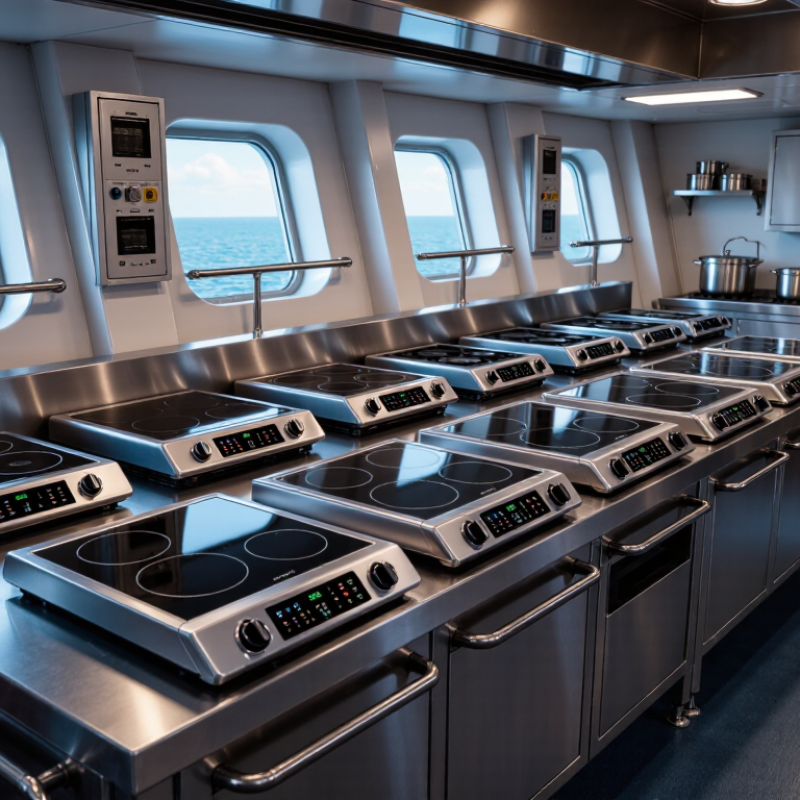
Marine Induction Cookers: Key Features and Applications
Marine induction cookers suit compact galleys on ferries, yachts, and workboats. They heat compatible cookware directly, leaving less residual heat around cooks and nearby equipment. The U.S. Department of Energy’s Energy Saver guidance says induction cooking can be up to three times more efficient than gas cooking and 10% more efficient than conventional smooth-top electric cooking. Those figures describe general cooking comparisons, not guaranteed savings aboard a vessel. Still, quicker heat response can help crews manage meal preparation during busy service periods. Small detail, big difference.
Marine use demands more than a powerful hob. Buyers should check supply voltage, peak electrical load, power limiting, and compatibility with onboard inverters. A pan that slides during vibration is a real hazard, so recessed surfaces, pot restraints, spill control, and lockable controls matter. Salt-laden air also makes corrosion resistance and accessible service parts important. The International Maritime Organization’s Fourth Greenhouse Gas Study estimated that shipping produced 2.89% of global human-caused greenhouse gas emissions in 2018. That figure highlights the sector’s energy challenge, but an induction cooker alone does not cut vessel emissions; its impact depends on the ship’s electricity source and operating profile. One limitation is easy to overlook: high-power cooking can compete with other galley or hotel loads, especially on smaller vessels.
How Marine Induction Cooker Suppliers Are Evaluated
What Are the Top 10 Marine Induction Cooker Suppliers?
How Marine Induction Cooker Suppliers Are Evaluated
Evaluate suppliers by vessel fit, not catalogue claims. Check rated voltage, peak power draw, cookware detection, mounting depth, and ventilation clearance against the galley layout. Request vibration, salt-mist, and electromagnetic compatibility test records, along with installation drawings and spare-part lead times. IEC 60533 covers electromagnetic compatibility on ships, so ask how the cooker was tested in a marine electrical environment. Paperwork matters.
Efficiency helps, but onboard load matters more. The U.S. Department of Energy estimates induction transfers about 85% of its energy to cookware, compared with roughly 32% for gas. However, a high-output hob may strain a small generator when ovens and pumps run together. The Fourth IMO GHG Study 2020 estimated shipping accounted for 2.89% of global human-caused CO₂ emissions in 2018. That makes onboard energy use worth checking. Compare measured consumption at realistic cooking loads, not peak ratings alone.
Tips: Request a heat-up test using the vessel’s cookware and supply voltage. Check whether controls work with damp hands and whether glass can be replaced at sea. A polished brochure helps, but the service plan can still be weak.
The Top 10 Marine Induction Cooker Suppliers
The Top 10 Marine Induction Cooker Suppliers
The top 10 marine induction cooker suppliers are best compared by vessel suitability, not headline wattage. Look for stable output, corrosion-resistant construction, accessible service parts, and clear installation guidance. A galley unit must handle vibration, salt-laden air, and repeated cleaning. Check whether the supplier provides wiring diagrams and realistic power-consumption figures. These details matter more than a polished product sheet.
The IMO’s Fourth Greenhouse Gas Study 2020 estimated that shipping produced 1,056 million tonnes of CO₂ in 2018, or 2.89% of global anthropogenic CO₂ emissions. That figure does not measure cooker efficiency, but it underscores why onboard energy use deserves attention. A supplier should state the unit’s rated load and explain how it fits the vessel’s electrical system. A top-ten list is not a universal ranking; equipment needs vary by vessel and galley layout.
Tips: Ask for marine-use test records and confirm ventilation and mounting requirements before purchase. Compare service response times, too. A low purchase price can look attractive, yet delayed replacement parts may cost more at sea. One detail is easy to miss: crew habits affect actual consumption, and supplier estimates may not reflect them.
Comparing Supplier Products and Specialties
Comparing ten marine induction cooker suppliers is more useful when the focus is product fit, not ranking alone. Some specialize in compact, single-zone units for small galleys; others offer wider cooktops with two cooking zones and touch controls. Look closely at cutout dimensions, countertop clearance, and mounting hardware. A unit that fits a catalog photo may not fit a narrow galley. Details matter.
Supplier specialties also differ in power options, control design, and installation support. Some provide clear wiring diagrams and practical guidance on ventilation and electrical capacity. Others put more emphasis on polished glass surfaces, preset heat levels, or cookware detection. Ask for rated input, installation requirements, warranty terms, and spare-part availability before comparing prices.
If possible, check the unit under realistic onboard conditions: vessel power can vary, and space around the cooker may be tight.
Not always obvious.
A supplier’s strongest feature may be its documentation rather than its longest feature list. I would still verify every specification in writing; product pages can leave important details unclear.
Choosing a Supplier for Your Vessel’s Needs
Choosing a marine induction cooker supplier starts with your vessel, not a catalogue. Check the cooker’s voltage, power draw, and peak load against the generator or inverter you actually use. A unit that suits a large yacht may strain a smaller boat’s electrical system. Ask for clear wiring details and realistic consumption figures, not just a headline wattage. Ask for proof. Reliable technical documents help your electrician assess the installation before the cooker reaches the galley.
Marine kitchens face vibration, salt air, cramped counters, and occasional splashes. Ask how the unit is tested for these conditions, and whether its controls can be used safely with damp hands. Small details matter. A smooth glass surface is easy to wipe, but replacement parts and repair access matter too. Confirm the warranty process, spare-part availability, and who provides technical help in your region. A low purchase price can become expensive when a vessel waits weeks for a control board.
Compare suppliers by how carefully they answer practical questions. Can they explain installation clearances, ventilation needs, and compatible cookware without vague promises? Request the user manual before ordering. Check that the stated safety and conformity documentation matches your vessel’s intended market and installation. One caveat: supplier claims still need independent review by a qualified marine electrician. I would not choose on price alone, though even a thorough checklist cannot predict every failure at sea.
