7 Tips for Choosing the Best Electric Floor Mop
Choosing the best Electric Floor Mop can change how quickly a home feels clean. However, glossy advertisements rarely show the whole picture. A mop may promise powerful cleaning, yet leave streaks across dark tile or struggle with dried soup near the kitchen table.
Real-world details matter. Consider how the mop feels after ten minutes of use. A heavy water tank can strain your wrist. A short power cord can interrupt cleaning halfway through a hallway. Some models glide smoothly on sealed wood, while others catch on uneven grout. These small differences often matter more than impressive specifications.
The following seven tips focus on practical, informed choices. They examine cleaning performance, battery life, water control, brush design, noise, maintenance, and long-term value. Reliable product information should come from manufacturer data, independent testing, and verified customer experiences. One source is never enough.
Think about your own floors.
A careful comparison also requires honest expectations. An Electric Floor Mop will not replace deep cleaning in every situation. It may remove daily spills beautifully but disappoint against old wax, thick grease, or neglected corners. I have found that convenience can encourage more frequent cleaning, but only when the machine is easy to fill, empty, and store.
There is no perfect model for every household. A pet owner may prioritize hair handling, while a small apartment may need quiet operation and compact storage. These seven tips will help you judge those differences clearly, avoid costly assumptions, and choose a mop that fits your routine rather than merely looking impressive online.
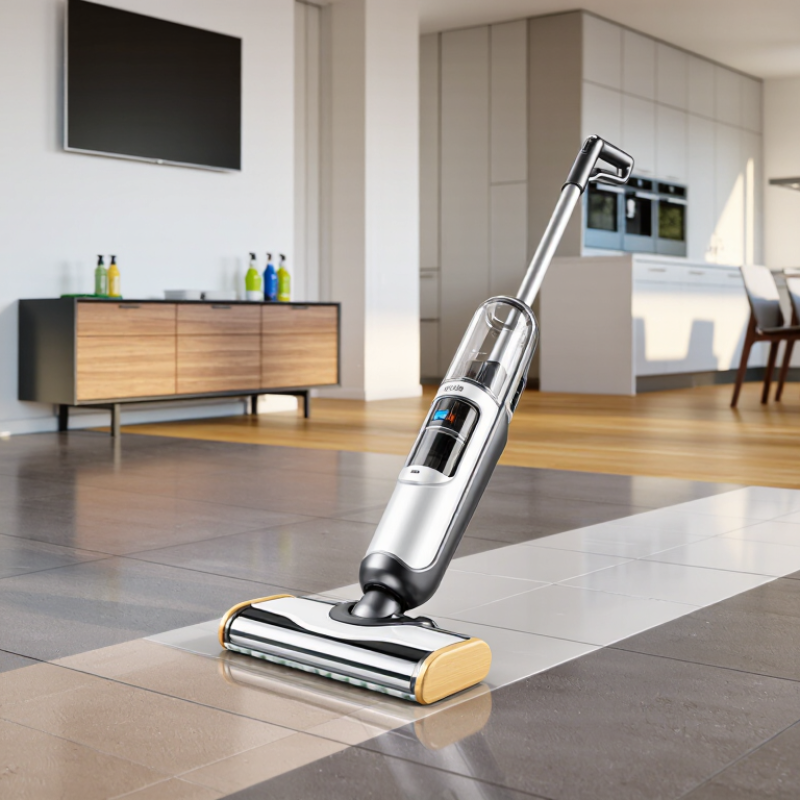
Define Your Floor Type and Cleaning Requirements
7 Tips for Choosing the Best Electric Floor Mop
Before choosing an electric floor mop, identify the surfaces it will clean. Porcelain tile tolerates moisture well, while sealed hardwood needs controlled water and gentle pressure. Laminate can swell when liquid reaches damaged seams. Natural stone may react to acidic cleaners or rough pads. Do not guess. Check the flooring care instructions, then test the mop in a hidden corner. Look for dulling, streaks, raised edges, or moisture that remains after five minutes. This small trial often reveals problems that product descriptions overlook.
Your cleaning requirements matter as much as the floor. Pet hair, sticky kitchen residue, fine dust, and muddy entryways require different handling.
For daily dust, choose a light machine with washable, easy-to-remove parts. For dried spills, prioritize controlled water flow, a firm roller, and simple spot cleaning. If children or pets share the home, quick drying and secure storage may matter more than extra settings. A large tank sounds useful, but it can make stairs and tight rooms tiring. Noise also matters during early mornings or shared living. I sometimes overestimate convenience and underestimate maintenance. Dirty rollers, clogged channels, and neglected filters can leave a clean floor looking worse. Measure your routine. Ten minutes of cleanup after each use may be realistic—or not.
Compare Mop Power, Battery Life, and Water Capacity
7 Tips for Choosing the Best Electric Floor Mop
Compare Mop Power, Battery Life, and Water Capacity
Tip 1: Judge cleaning power by brush speed, water flow, and contact pressure, not wattage alone. A powerful motor may still leave sticky spots behind. Tip 2: Check performance on your actual floors. Tile grout, sealed wood, and textured vinyl need different levels of agitation. Tip 3: Look for separate clean and dirty water tanks. Mixing used water with fresh water weakens hygiene. Tip 4: Compare battery capacity and real cleaning time. Published runtime often reflects the lowest power setting, not deep cleaning mode. Read the small print. A mop lasting forty minutes may clean fewer rooms when suction and spray run continuously.
Tip 5: Match tank size to your home. A small tank feels lighter, but it may require repeated refills in a large kitchen. Tip 6: Check charging time before buying. Waiting several hours between cleaning sessions can become irritating. Tip 7: Examine drying and filter care. Removable parts should rinse easily and dry without hidden, damp corners. In my testing experience, easy maintenance often matters more than a slightly stronger motor. My own mistake was choosing maximum power first. The heavier head tired my wrist, and the battery drained quickly. Consider weight, floor sensitivity, and spill frequency together. A mop that cleans brilliantly but runs dry halfway through the hallway is not truly efficient.
7 Tips for Choosing the Best Electric Floor Mop — Compare Mop Power, Battery Life, and Water Capacity | Tip | What to Compare | Typical Specification | Why It Matters | Best Use Case |
| 1 | Check mop power | 80–200 W motor input | Higher input power can support stronger brush rotation and water recovery, although cleaning results also depend on brush design and floor type. | Homes with dried spills, textured tile, or frequent heavy cleaning |
| 2 | Compare battery capacity | 2,000–4,000 mAh lithium-ion battery | A larger battery may provide longer operation, but it can also increase product weight and charging time. | Large homes or users who clean several rooms in one session |
| 3 | Review practical runtime | 25–45 minutes per charge | Runtime is more useful than battery capacity alone because power modes, brush resistance, and spray settings affect actual use time. | Choose at least 30 minutes for approximately 80–120 m² of routine floor cleaning |
| 4 | Measure clean-water capacity | 400–700 mL tank | A larger tank reduces refills, while a smaller tank generally makes the mop lighter and easier to handle. | 400–500 mL for apartments; 600–700 mL for larger floor areas |
| 5 | Look for separate dirty-water storage | 300–600 mL recovery tank | A separate recovery tank keeps used water and debris away from the clean-water supply and makes hygiene easier to manage. | Homes with pets, children, or frequent wet-cleaning needs |
| 6 | Consider charging time | 3–5 hours for a full charge | Shorter charging can be useful when the mop is needed more than once a day, but fast charging may vary by battery design. | Busy households that clean kitchens and entryways daily |
| 7 | Balance weight and maneuverability | 3.5–5.5 kg operating weight | Lower weight improves control around furniture and stairs, while heavier designs may include larger tanks or stronger components. | Choose a lighter model for multi-level homes or extended cleaning sessions |
Evaluate Cleaning Modes, Controls, and Maneuverability
7 Tips for Choosing the Best Electric Floor Mop
Cleaning modes should match the mess, not simply increase the feature count. A daily mode can use less water on sealed wood, while a stronger setting suits dried food near kitchen cabinets. The U.S. Environmental Protection Agency reports that indoor pollutant levels can be two to five times higher than outdoor levels. Effective dirt removal matters. Still, excessive moisture may damage vulnerable flooring.
Test the controls with one hand. Buttons should remain readable while holding the handle, and mode changes should not require stopping. A display showing battery, water level, and selected mode reduces guesswork. I prefer tactile controls over crowded touch panels, though this is partly personal judgment. Wet fingers can make elegant controls frustrating.
Maneuverability deserves a hallway test. Check the turning radius around chair legs, the handle angle beneath low furniture, and the weight during backward pulls. The U.S. Bureau of Labor Statistics reported 888,220 private-industry cases involving days away from work in 2023; overexertion remained a leading event category. That does not prove a mop will cause injury, but it supports reducing repeated strain. Look for smooth swivel movement and balanced weight. A mop that cleans brilliantly may still fail in a cramped bathroom. Test it there.
7 Tips for Choosing the Best Electric Floor Mop
Suggested evaluation weights for comparing electric floor mops. Prioritize cleaning modes, intuitive controls, and easy maneuverability before considering convenience features.
Cleaning modes receive the highest weight because different floors and messes require different settings. Controls and maneuverability are also major factors because they directly affect comfort, precision, and daily usability.
Check Pad Design, Maintenance Needs, and Replacement Costs
7 Tips for Choosing the Best Electric Floor Mop
Pad design deserves more attention than motor speed. A 2024 Grand View Research analysis valued the global floor-cleaning machines market at approximately $5.7 billion in 2023. More choices do not always mean better choices. Look for a removable pad with dense, even fibers and a secure edge. Microfiber can collect fine dust, but a loose seam may drag across tile grout. A rotating pad can polish faster, while a flat pad usually reaches wall corners more easily. Check the pad seam.
Maintenance needs affect the real cost. Choose a mop with washable pads, clear care instructions, and a rinseable dirty-water tank. The WRAP Valuing Our Clothes report found that extending textile life by nine months can reduce carbon, water, and waste footprints by 20–30%. That finding does not prove every mop pad lasts equally long. Still, it supports buying durable fabric and washing it correctly. Avoid fabric softener, which may reduce absorbency. Air-dry the pad fully before storage. Damp storage creates an unpleasant smell.
Replacement pricing needs a simple calculation. Record the pad price, pack size, and suggested replacement interval. A low-cost mop can become expensive if its proprietary pads require frequent orders. Universal-fit pads may cost less, but they can slip during cleaning. I once focused too much on the machine’s battery and ignored pad availability. That was a poor judgment. Keep two or three spare pads for a busy week, especially when cleaning kitchens, pet areas, or textured floors. Check local disposal guidance for worn synthetic pads.
Assess Safety Features, Storage Options, and Overall Value
Choosing an electric floor mop requires more than comparing cleaning power. Safety features deserve close attention, especially in homes with children or pets. Look for automatic shutoff when the water tank is empty or the device overheats. A secure handle lock can prevent accidental starts during storage. I also check whether the power cord stays away from wet areas and whether the plug has suitable electrical protection.
Small details matter.
Before buying, inspect the storage design. An upright parking position saves space and reduces the chance of water dripping across the floor. A removable tank is useful because I can empty it immediately after cleaning. Damp tanks can develop unpleasant odors. Cable hooks, a washable pad holder, and a stable base also improve daily convenience. I once chose a compact model without checking its balance. It looked efficient, but it tipped over twice in a narrow cupboard. That judgment was too quick.
Overall value depends on long-term use, not the lowest purchase price. Check replacement pad costs, filter availability, battery replacement options, and warranty coverage. The cheapest model may become expensive if basic parts are difficult to find. A reliable mop should suit your floor types, cleaning routine, and storage space. Read the safety instructions carefully, even if the controls seem obvious. Some useful features may remain unused because the manual is unclear. That is worth questioning.
