Top 10 Fiberglass Front Doors for Global Buyers
A front door faces rain, heat, fingerprints, and daily use. Fiberglass Front Doors appeal to global buyers because they can combine a wood-like finish with resistance to moisture and routine wear. Still, performance varies by construction, finish, seals, and installation. A convincing product image is not a performance test.
Industry benchmarks help set expectations. Remodeling magazine’s 2024 Cost vs. Value report estimated a U.S. fiberglass grand entrance replacement at about $11,353, with roughly 46% of the cost recouped at resale. This is a national estimate, not a guaranteed return; labor, product specification, and local market conditions change the result. For energy performance, the U.S. Department of Energy advises buyers to assess the whole opening, including weatherstripping and installation, rather than judging the door slab alone. NFRC labels can also help compare rated products where applicable.
This Top 10 guide compares manufacturers and models through practical buyer criteria: construction, thermal details, design range, customization, warranty clarity, and service availability. Global buyers should verify local sizing, hardware compatibility, finish support, and delivery terms before ordering. Small details matter. A poorly sealed frame can undermine a premium door. Rankings are useful, but they cannot replace a sample, technical specification sheet, or qualified installer’s advice. Some comparisons remain imperfect because brands disclose different levels of product data. That limitation deserves attention, not a polished sales claim.
Fiberglass Front Doors: Materials, Construction, and Performance
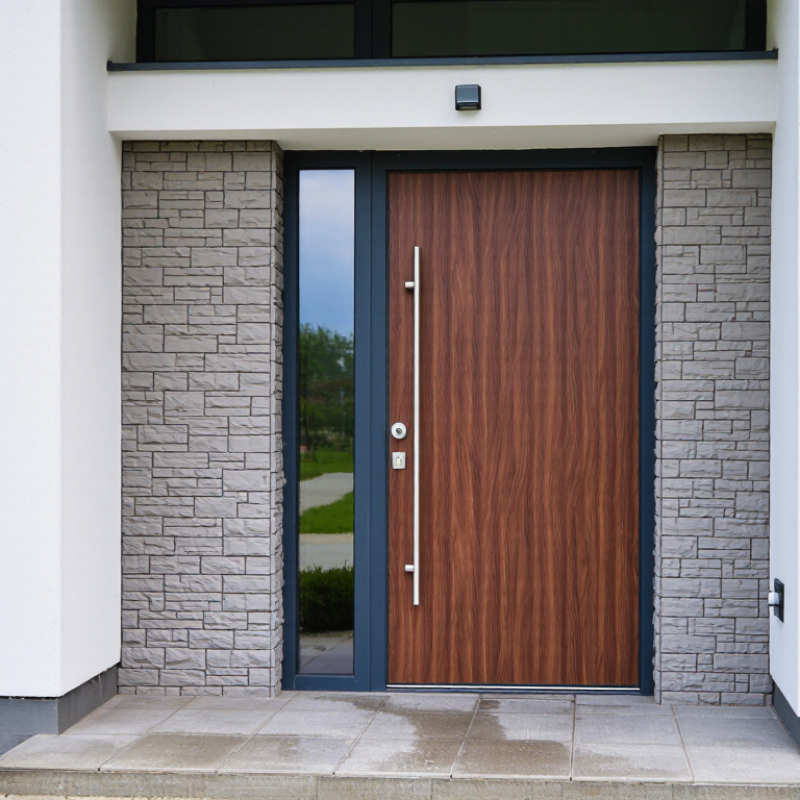
Fiberglass front doors combine molded skins with an insulated core, often polyurethane foam. The surface can imitate wood grain, but it does not behave exactly like solid timber. It resists routine moisture and is less prone to swelling, though deep scratches may be difficult to repair neatly. Small details matter.
Construction varies. Some doors use composite or engineered-wood rails and stiles around the core; others rely on different internal supports. Ask how the edges are sealed and where locks or hinges receive reinforcement. A door may feel sturdy in a showroom yet perform poorly if its frame is out of square or its weatherstripping is compressed unevenly. Installation counts.
Thermal and weather performance depend on the complete assembly, not just the fiberglass skin. Check the door’s tested insulation figures, glass specifications, seals, and threshold design against the climate where it will be installed. In sunny regions, finish quality and exposure can affect long-term appearance; in wet or coastal settings, hardware and regular cleaning still deserve attention. No door is maintenance-free. It is also easy to overvalue a high insulation rating while overlooking air leaks around the frame. Compare documented test results, then inspect the sample closely, especially at corners, glazing edges, and the bottom seal.
Top 10 Fiberglass Front Doors for Global Buyers: Materials, Construction, and Performance
Typical Thermal Conductivity of Common Door Materials
Lower thermal conductivity means less heat passes through the material. These are approximate representative values for bulk materials, not whole-door ratings. A fiberglass door’s actual performance depends on its skin, insulating core, frame, seals, and glazing; compare complete-door U-factor or R-value when evaluating products.
Key Features Used to Compare Fiberglass Entry Doors
Top 10 Fiberglass Front Doors for Global Buyers: Key Features Used to Compare Fiberglass Entry Doors
A reliable comparison starts with measurable performance, not appearance alone. Check each door’s U-factor, air leakage, water resistance, and wind-load rating. Lower U-factors generally indicate better insulation. The U.S. Department of Energy’s Energy Saver guidance estimates that windows account for 25–30% of home heating and cooling energy use. This figure concerns windows, not doors, but highlights why a door’s thermal performance deserves attention. Use NFRC-certified ratings where available, and compare products tested under equivalent conditions.
Tips: Inspect the frame, weatherstripping, threshold, and glass area. Ask for test documentation and confirm the stated dimensions match your opening. A tight seal matters.
Fiberglass doors resist moisture and can imitate painted wood, but construction and finish quality vary. Compare panel thickness, reinforcement, hardware preparation, and finish warranties. For homes exposed to strong sun or driving rain, ask how the surface and seals performed in relevant tests. Also confirm that replacement parts and installation support are accessible in your market. One comparison can still feel imperfect: laboratory ratings cannot fully predict local installation quality or years of daily use. That uncertainty is worth noting.
Top 10 Fiberglass Front Doors for Global Buyers - Key Features Used to Compare Fiberglass Entry Doors
| No. | Door Style | Typical Configuration | Key Features to Compare | Potential Advantages | Points to Check Before Purchase |
|---|---|---|---|---|---|
| 1 | Smooth, flush-panel door | Single slab; solid or insulated core; plain surface | Slab thickness, core construction, edge detail, paint compatibility, and available sizes | Simple appearance; suits contemporary façades and a wide range of paint colors | Confirm whether the surface is factory-finished or intended for painting, and follow the specified preparation instructions |
| 2 | Raised-panel door | Single slab with molded panel profiles | Panel layout, profile depth, surface texture, finish options, and frame compatibility | Traditional appearance without relying on a solid-wood door slab | Check that the panel design and hardware preparation match the intended opening and local requirements |
| 3 | Wood-grain-look door | Single slab with a molded or textured surface designed to resemble wood | Grain pattern, stain or paint system, color consistency, and finish-maintenance guidance | Offers a wood-inspired appearance; fiberglass surfaces are generally less prone to moisture-related swelling than wood | Ask how the finish should be cleaned and maintained; appearance and finish durability depend on the specific product and exposure |
| 4 | Decorative-glass door | One or more glazed inserts, which may include textured or patterned glass | Glazing type, glass safety markings, privacy level, visible-light transmission, and glazing seals | Allows daylight into an entry area and can add a decorative focal point | Verify glazing safety requirements for the installation location and check applicable energy-code requirements |
| 5 | Clear-glass door | Single slab with a clear-glass lite or larger glazed area | Glass area, glazing performance, safety-glass specification, seals, and privacy needs | Can provide substantial daylight and an open visual connection to the outdoors | Compare privacy, solar gain, thermal performance, and required safety glazing for the project location |
| 6 | Half-lite door | Glazed section in the upper portion of the slab, with a solid lower section | Lite size, glass type, frame design, weather seals, and available slab dimensions | Balances daylight with a larger solid lower panel than a full-lite design | Check sightlines, privacy needs, glass safety requirements, and the door’s tested performance data |
| 7 | Three-quarter-lite door | Glazed area covering much of the slab, with a smaller solid lower panel | Glazing configuration, glass specification, lite-frame construction, and energy-performance data | Provides more daylight than a half-lite design while retaining a solid panel at the bottom | Consider privacy, exposure to direct sun, and the performance of the complete door assembly |
| 8 | Full-lite door | Large glazed area within the slab | Glazing safety, glass performance, frame strength, weather sealing, and available styles | Maximizes daylight and can suit entries where visibility and a light-filled interior are priorities | Confirm that the glazing is appropriate for the location and that the complete assembly meets applicable code requirements |
| 9 | Double-door entry set | Two side-by-side door slabs, commonly with one active and one inactive leaf | Active-leaf arrangement, astragal or meeting-stile design, hardware, seals, and clear opening width | Creates a broad entry and allows both leaves to open when the configuration permits | Check the required rough opening, threshold, operating hardware, weather sealing, and local egress rules |
| 10 | Door with sidelights or transom | Single or double door combined with fixed glazed panels at the sides or above | Panel layout, glazing specification, frame system, overall unit dimensions, and installation details | Adds daylight and can make an entry feel wider or taller | Evaluate the complete assembled unit, including structural support, glazing safety, water management, and energy performance |
Comparison note: These are common fiberglass entry-door styles, not a brand ranking. Construction, dimensions, finishes, glazing, warranties, and performance vary by product. For a fair comparison, request documented thermal and air/water performance for the complete door assembly, confirm the rough opening and handing, and check the building codes and climate requirements at the installation site.
Ten Fiberglass Front Door Options for Global Buyers
Global buyers can compare ten fiberglass front door options by appearance, glazing, and construction. A smooth flush door offers a clean surface for paint and suits restrained entrances. A woodgrain finish adds visible texture without the upkeep associated with many natural wood doors. Raised-panel designs create a more traditional profile, while Craftsman-style doors bring square lines and a practical, substantial look. A modern narrow-glass design admits daylight without making the entrance feel fully exposed.
Full-lite doors provide broad views and generous light, though they may offer less privacy. Textured or frosted glass softens visibility while brightening a hallway. Sidelights add glazed panels beside the door; check the available opening width before choosing them.
A transom places glass above the frame and can make a low entry feel taller. An insulated-core option may help limit heat transfer, but performance depends on the complete door assembly and installation. A custom-painted finish allows closer coordination with exterior trim. Dark colors can look striking, but dust shows quickly.
Compare frame depth, handing, hardware preparation, glazing details, and stated performance data before ordering. Ask suppliers for drawings and installation requirements, especially when shipping across regions. Specifications and test standards can differ by market, so verify local project requirements with a qualified installer. One detail is easy to overlook: a beautiful glass pattern may not suit the home’s privacy needs. The best choice is not always the most elaborate one.
Comparing Designs, Security, Energy Efficiency, and Maintenance
A useful comparison of the top 10 fiberglass front doors starts with design and fit, not color alone. Smooth panels suit modern facades, while molded wood-grain textures add depth without requiring regular painting. Check the frame, threshold, and weatherstripping too; a beautiful slab cannot compensate for air gaps. Small details matter.
Security depends on the complete assembly. Look for a reinforced frame, a properly fitted deadbolt, and hinges secured to the structure, not just decorative hardware. A multi-point lock may spread force across the door edge, but installation quality still matters. I would not judge security by the number of bolts in a product description. Ask how the lock, frame, and glass work together.
Energy ratings make comparisons clearer. The U.S. Department of Energy’s Energy Saver guidance estimates that windows account for roughly 25–30% of residential heating and cooling energy use; that figure is not specific to entry doors, but it shows why glazing and air sealing deserve attention. Check the National Fenestration Rating Council label for U-factor and solar heat gain coefficient, then compare like-sized configurations. For upkeep, fiberglass resists routine moisture better than many wood finishes, but it is not invincible. Inspect seals, repaint when the finish requires it, and clean grit from the threshold. A small maintenance miss can become a draft.
How to Choose a Fiberglass Front Door for Your Market
Choosing a fiberglass front door starts with climate, not appearance. The U.S. Department of Energy estimates that heat gain and loss through windows account for 25%–30% of residential heating and cooling energy use. Doors are different, but the figure shows why whole-opening performance matters. In cold markets, compare the complete door’s U-factor and inspect weather seals. In hot, sunny regions, consider glass area, shading, and the door’s solar exposure. A dark door facing strong afternoon sun may feel noticeably warmer.
Salt air, heavy rain, and frequent temperature swings also shape the right specification. Fiberglass resists rust and can mimic a painted wood grain, but finish quality and installation still matter. Ask for test data on the complete assembly, including its frame, glass, and threshold—not just the panel. Check whether replacement seals and local service are available. Small details matter.
Tips: Match the door’s swing, threshold height, and glazing to local building practice. Request documented air-leakage and water-penetration results. If test conditions do not resemble your climate, pause and ask questions. A polished sample can be persuasive; it cannot prove long-term performance.