top of page

Call Ahead! 262.242.1050

ask for an appointment with Dave or Emily!

How to Choose an Automatic Pergola Supplier?

Choosing an Automatic Pergola supplier is not simply a price comparison. It is a decision about shade control, structural safety, motor reliability, and long-term service. A pergola may look elegant in a showroom, yet perform poorly under wind, rain, or repeated daily use. The details matter.

Industry data supports this growing demand. MarketsandMarkets projects the global smart home market to expand from about USD 154 billion in 2024 to more than USD 249 billion by 2029. Automatic Pergola systems belong to this wider movement toward connected outdoor living. However, major reports rarely separate motorized pergolas from broader patio and smart-home categories. That limitation deserves attention. Suppliers may present impressive market statistics without offering pergola-specific evidence.

Paul Renson, founder of Renson, has often described outdoor living as “an extension of the home.” This idea explains why supplier selection requires more than attractive product images. Buyers should examine aluminum grades, drainage design, motor brands, wind ratings, control compatibility, installation experience, and replacement-part availability. Ask for testing documents. Request completed project references. Stand beside a working unit and listen to its motor.

A low quotation can be appealing. It can also conceal weaker coatings, unclear warranties, or expensive installation changes. I may sound cautious, but outdoor equipment rewards careful questions. The right Automatic Pergola supplier should provide measurable specifications, transparent after-sales support, and realistic performance expectations. The following guide examines these points, helping buyers compare suppliers with greater confidence and fewer costly surprises.
How to Choose an Automatic Pergola Supplier?

Define Pergola Needs by Roof Type, Span, Load, and Automation Level

How to Choose an Automatic Pergola Supplier?

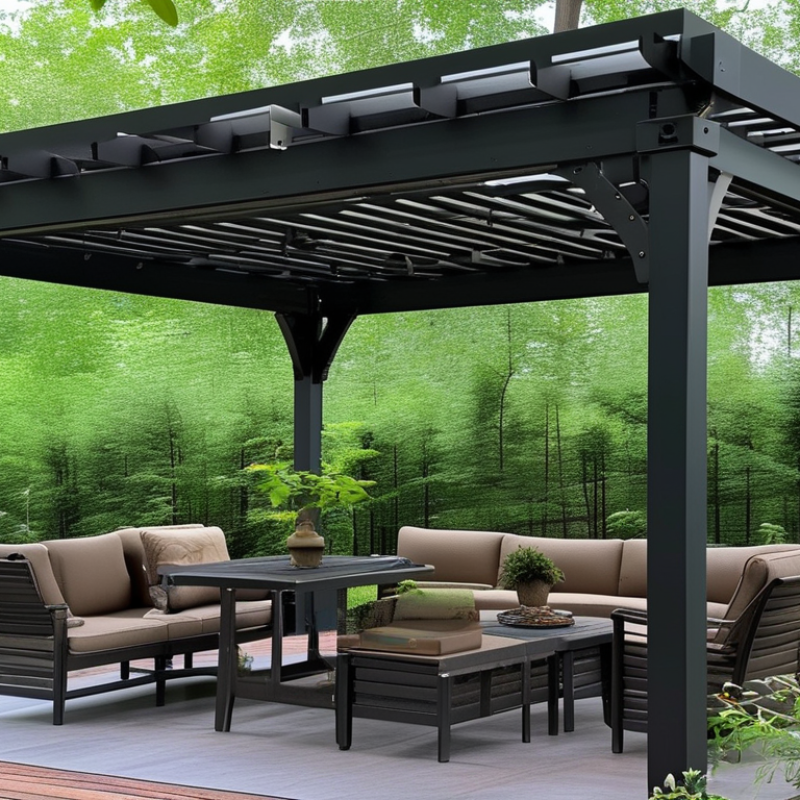
Begin with the roof type, not the control app. Fixed roofs provide dependable shade and rain protection, while louvered roofs manage sunlight and ventilation. Retractable fabric roofs reduce weight but need careful tension and drainage design. The U.S. Department of Energy reports that exterior shading can reduce solar heat gain by up to 77% on west-facing windows. This figure is a useful reference, not a pergola guarantee.

Measure the clear span, post positions, and drainage path. A wider opening increases beam deflection and motor demand. Ask the supplier for wind, snow, and rain-load calculations based on ASCE 7-22 and local climate data. NOAA’s 1991–2020 Climate Normals can help verify regional wind, rainfall, and temperature conditions. “Heavy-duty” is not enough. Request load tables, material thickness, corrosion testing, and installation photos from similar spans. Small details matter, such as concealed gutters and a manual override during power loss.

Automation should match the site and your habits. Basic systems may use a wall switch, while advanced systems add rain, wind, sun, and temperature sensors. Ask how the roof behaves during strong gusts. Does it close automatically, lock safely, or stop halfway? Check motor torque, cycle testing, spare-part availability, and warranty terms. A low-cost controller can look attractive, but weak sensor logic may create maintenance problems. I would also test the app outdoors, where signal loss and wet hands expose flaws quickly. The supplier should explain limitations clearly, even when the answer is inconvenient.

Check Supplier Wind-Load Ratings Against ASCE 7 Design Criteria

How to Choose an Automatic Pergola Supplier?

A supplier’s wind-load rating should match your project’s ASCE 7 design conditions. Do not compare headline numbers alone. A claimed 120 mph rating may use a different exposure category or risk category. ASCE/SEI 7-22 evaluates basic wind speed, exposure, topographic effects, directionality, and enclosure conditions. These factors change the required pressure on louvers, posts, beams, and connections.

Ask for calculations, not only a product brochure. The supplier should identify the project location, design wind speed, exposure category, risk category, and load direction. Check whether the stated speed uses ultimate or allowable-strength design. That difference matters. ASCE 7-22 wind maps use regional hazard data, and the ASCE 7 Hazard Tool provides site-specific criteria for design professionals. A useful check is comparing the supplier’s figures with local building-code requirements and a licensed engineer’s review.

Anchorage deserves close attention. A strong roof can still fail when base plates, bolts, or concrete edges are undersized. Request connection details, foundation assumptions, and testing records. FEMA P-55 highlights the importance of continuous load paths in wind-resistant construction. That principle applies here. Field conditions are rarely perfect. Existing slabs may be thinner, cracked, or poorly reinforced. I would question any supplier that gives one universal rating. Convenient, but incomplete. Small details often decide performance.

Verify Motor and Control-System Protection Using IEC 60529 IP Ratings

How to Choose an Automatic Pergola Supplier?

When comparing automatic pergola suppliers, inspect the motor and control system, not only the frame. IEC 60529 IP ratings show protection against solids and water. The first digit covers dust. The second addresses moisture. An IP65 enclosure is dust-tight and resists water jets. An IP67 enclosure also tolerates temporary immersion under defined test conditions. Higher numbers do not automatically mean better outdoor performance.

Ask the supplier for complete IP test reports, product datasheets, and installation instructions. Ask for evidence. Check whether the stated rating applies to the complete motor assembly or only its housing. Cable glands, connectors, switches, and control boxes can create weak points. Water finds weak points. Examine how cables enter the enclosure, especially beneath the pergola where rainwater may collect. Confirm that seals remain effective after maintenance and repeated opening.

A reliable supplier should explain the test method, mounting position, and operating limits clearly. Dust, salt air, freezing temperatures, and ultraviolet exposure may affect long-term protection, even when the IP rating looks impressive. Installation quality matters too. A badly tightened gland can defeat a well-tested enclosure. Details matter. I would also question vague claims such as “weatherproof” without an IEC 60529 rating. One limitation is easy to miss: an IP test does not prove complete resistance to every outdoor condition. That distinction deserves careful discussion before purchase.

Compare Aluminum Grades, Coating Standards, and Structural Test Data

Choosing an automatic pergola supplier requires more than comparing catalog photos. Ask which aluminum grade supports the moving roof, posts, and connection points. 6063-T5 offers clean extrusion surfaces and good corrosion resistance. 6061-T6 usually provides higher structural strength. The right choice depends on span, wind exposure, and joint design. The Aluminum Association notes that recycled aluminum requires about 95% less energy than primary aluminum, but recycled content does not replace engineering evidence.

Coating quality deserves equal attention. Request test results against AAMA 2603, 2604, or 2605 standards. AAMA 2605 represents the strongest architectural coating class, with stricter weathering and color-retention requirements. Ask for coating thickness, pretreatment details, and accelerated weathering results. A certificate alone can mislead. Surface preparation often decides long-term performance. That detail is easy to overlook.

Tips: Request a stamped load calculation, not only a product brochure. Check whether testing followed ASTM E330 for structural performance under air pressure. Compare the tested span, louver angle, drainage condition, and connection details with your project. ASCE 7-22 wind provisions can produce very different design pressures between coastal and inland sites. Also inspect the report date. Old test data may not represent a revised motor, frame, or gasket. I would leave room for uncertainty here; laboratory performance is valuable, but installation quality can still change the result.

Evaluate Warranty, Lead Time, MOQ, and 5-Year Ownership Costs

Choosing an automatic pergola supplier requires more than comparing the frame price. Warranty, lead time, MOQ, and five-year ownership costs reveal the supplier’s real reliability.

A credible warranty should separate structure, motor, control system, finish, and drainage components.

Ask whether labor, corrosion, water damage, and replacement shipping are included. The U.S. Bureau of Labor Statistics reported 2.9% consumer inflation in 2024. Therefore, estimate maintenance and service costs with annual increases, not today’s prices. Include electricity, cleaning, fabric replacement, sensor calibration, and possible motor repairs. A supplier offering a five-year warranty may still create expensive exclusions.

Lead time should show production, inspection, sea or road transport, customs handling, and installation.

Require these dates in writing. MOQ matters for developers, but small projects should avoid paying for unnecessary units.

Compare the delivered cost per installed pergola, not the factory quotation.

Tips:

Request three comparable quotations. Ask for a warranty sample, spare-parts list, test records, and references from similar climates. Calculate this formula:

purchase price + installation + five-year maintenance + energy + expected repairs.

I once focused too heavily on the lowest quotation and ignored commissioning time. That mistake looked small, but it delayed site use by several weeks. Also, verify motor duty cycles and wind-load documentation. The 2024 Dodge Construction Network reports continued project-scheduling pressure across construction supply chains, so vague delivery promises deserve careful questioning.

bottom of page