top of page

Call Ahead! 262.242.1050

ask for an appointment with Dave or Emily!

​

​

How to Choose the Best Outdoor Couch in 2026?

Choosing the best Outdoor Couch in 2026 requires more than following attractive photographs. Comfort matters. So do weather resistance, construction quality, maintenance, and honest value.

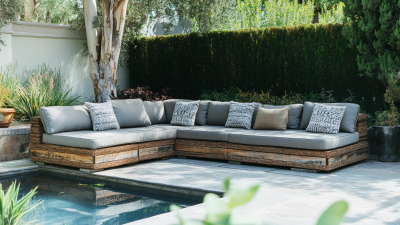
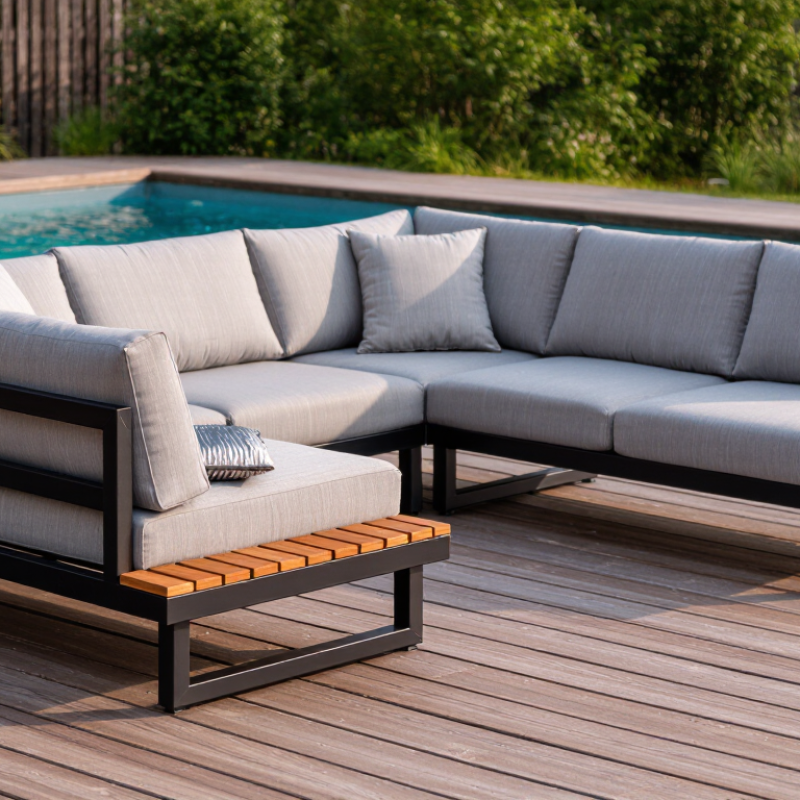
Outdoor-living designer Jamie Durie has said, “The garden is the first room of the house.” That idea changes how we judge an outdoor couch. It should support real routines, not simply decorate a patio. Picture a deep seat beside a bright pool, cushions drying after rain, and enough space for guests to move comfortably. These details reveal whether a design works beyond the showroom.

This guide examines frame materials, cushion density, fabric performance, drainage, modular flexibility, and warranty coverage. Aluminum may suit humid climates, while treated hardwood can offer warmth and strength. However, every material has weaknesses. Powder coating can scratch. Wood needs care. Even premium fabric may fade under relentless sunlight.

Measurements deserve attention too. A couch that looks generous online may overwhelm a narrow balcony. A low seat may feel stylish but frustrate older users. Small oversights become daily annoyances.

The recommendations will consider climate, household habits, budget, and available space. They will also distinguish genuine durability from persuasive marketing language. No Outdoor Couch is perfect. That is worth admitting.

A reliable choice balances comfort today with maintenance tomorrow. It should feel inviting at sunset and remain dependable after changing seasons. This 2026 guide aims to make that decision clearer, while leaving room for personal taste and practical compromise.
How to Choose the Best Outdoor Couch in 2026?

Set Requirements Using GVR’s 5.2% Outdoor-Furniture CAGR Forecast

The outdoor furniture market is projected to grow at a 5.2% CAGR, according to GVR. That forecast matters when choosing an outdoor couch in 2026. More demand may bring better materials, smarter layouts, and wider price ranges. It may also create rushed designs that look attractive but age poorly.

Set requirements before browsing. Measure the patio, doorways, and turning space. Leave at least 60 centimeters for comfortable movement around the couch. Consider direct sun, heavy rain, coastal air, and winter storage. Shade changes everything. A covered patio may tolerate lighter upholstery, while an exposed deck needs water-resistant fabric and a rust-resistant frame.

During product checks, sit for ten minutes if possible. Notice whether the seat feels supportive or simply soft. Check cushion drainage, removable covers, stitching, hardware, and frame joints. I once prioritized deep cushions and ignored drying time. After rain, the couch stayed damp longer than expected. That mistake changed my checklist.

A 5.2% growth forecast should not push you toward the most expensive option. Use it as a planning signal, not a promise of quality. Compare warranty language, replacement cushion availability, care instructions, and repair access. Materials with strong weather performance can reduce maintenance, but they still need cleaning and ventilation. A couch that fits your climate, space, and daily habits will usually outperform a fashionable piece chosen in a hurry.

Compare Frames by BIFMA X5.4 Load and Stability Test Criteria

How to Choose the Best Outdoor Couch in 2026?

A strong outdoor couch begins with its frame. BIFMA X5.4 provides useful criteria for evaluating lounge seating under load and stability conditions. Ask for test evidence, not only attractive specifications. Check the tested configuration, applied loads, test cycles, deformation, and tip resistance. A report for one frame size may not represent every couch version.

Steel frames often feel rigid, but exposed joints can invite corrosion. Aluminum is lighter, yet thin sections may flex under repeated loading. Hardwood can look warm and substantial, although moisture changes may affect joints. Pay close attention to welds, fasteners, corner blocks, and the connection between legs and frame. Small movements matter. Sit near the edge, shift your weight, and observe whether the couch rocks or twists.

Look beyond the pass result. BIFMA X5.4 mainly supports structural and stability evaluation; it does not replace weathering or corrosion assessment. Ask whether cushions, fasteners, and coatings were tested separately. A couch may pass a laboratory load test but still age poorly beside a pool. This is where my own judgment can become too optimistic. A heavy frame feels safer, but weight alone proves little. Compare clear measurements, independent test documents, and visible construction details before choosing.

How to Choose the Best Outdoor Couch in 2026? - Compare Frames by BIFMA X5.4 Load and Stability Test Criteria

Frame Material Screening Before Reviewing the BIFMA X5.4 Test Report
Frame Type Typical Density Typical Strength and Stiffness Profile Outdoor Exposure Performance Load-Test Consideration Stability Consideration Maintenance Level Initial Screening Result
6061-T6 aluminum tubing Approximately 2.70 g/cm³ Lightweight structural metal; typical elastic modulus is approximately 69 GPa. Strength depends strongly on tube size, wall thickness, temper, weld design, and heat-affected zones. Very good corrosion resistance when properly finished; galvanic corrosion can occur where aluminum contacts dissimilar metals in moisture. Use larger tube sections, reinforced joints, and adequate wall thickness to limit bending and permanent deformation under seat, back, and arm loading. Low mass can reduce resistance to tipping unless the base is wide, the center of gravity is low, or ballast is incorporated. Low to moderate; inspect finish, joints, fasteners, and drainage paths. Strong candidate when the tested assembly demonstrates adequate stiffness and anti-tip performance.
Powder-coated carbon steel Approximately 7.85 g/cm³ High stiffness; typical elastic modulus is approximately 200 GPa. Structural capacity depends on steel grade, section geometry, weld quality, and corrosion allowance. Good when coating is continuous and intact; scratches, cut edges, weld zones, and trapped moisture can initiate corrosion. High mass and stiffness can support strong load performance, but welds, joints, and local buckling zones must still be tested. Higher self-weight generally improves resistance to sliding and overturning, provided the base geometry is appropriate. Moderate; check coating damage, rust staining, drainage, and fastener condition. Strong candidate for robust, stable designs when corrosion protection is verified.
Austenitic stainless steel Approximately 8.00 g/cm³ High stiffness with an elastic modulus of approximately 193 GPa. Mechanical properties vary by alloy, cold work, tubing profile, and weld condition. Very good resistance to general atmospheric corrosion; chloride-rich coastal environments still require suitable alloy selection and cleaning. Good mass and stiffness can support load capacity, but test evidence must address welds, fasteners, seat rails, and local stress concentrations. High frame mass can improve stability, subject to base width, leg placement, and floor contact. Low to moderate; periodic cleaning is recommended in salt-air environments. Strong candidate for demanding outdoor or coastal use when the alloy and weld finish are documented.
Glass-fiber-reinforced polymer Approximately 1.30–1.90 g/cm³, depending on resin and fiber content Properties are direction-dependent and affected by fiber orientation, temperature, moisture, UV exposure, and long-term creep. Good resistance to rust; UV stabilization and water management are important for long service life. Long-duration loading and repeated loading require particular attention because polymer creep can reduce stiffness over time. Low mass may require a wider base, anti-slip feet, ballast, or a geometry designed specifically for overturning resistance. Generally low; inspect for cracking, fiber exposure, UV embrittlement, and fastener pull-out. Consider only when complete-assembly load, durability, and stability evidence is available.
BIFMA X5.4-Oriented Load and Stability Comparison Checklist
Evaluation Area What the Test Is Intended to Examine Evidence to Request for the Outdoor Couch Pass-Selection Indicator Common Frame or Design Risk
Seat static load Whether the seat structure and supporting frame withstand the specified downward loading without structural failure, hazardous separation, or unacceptable permanent deformation. Laboratory report identifying the exact couch configuration, seat construction, frame material, test setup, applied load, duration, and observations after testing. The complete assembly passes the current applicable edition and configuration requirements, not merely a material coupon test. Undersized seat rails, weak corner joints, insufficient weld penetration, fastener pull-out, and excessive tube bending.
Backrest static load Whether the back frame, back-to-seat connection, and rear supports resist concentrated or distributed force applied to the backrest. Report showing the tested back angle, loading location, support condition, and post-test inspection results. No fracture, hazardous loosening, sharp deformation, or loss of attachment after the specified test sequence. Weak rear uprights, short weld lengths, flexible back slats, and poor transfer of force into the seat frame.
Armrest static load Whether an armrest and its attachments resist downward or side-related loading that can occur when a user sits down, stands up, or leans sideways. Separate results for each arm configuration, including arm-to-back and arm-to-seat attachment details. Arm supports remain secure and functional with no dangerous cracking, detachment, or sharp edges. Armrests attached only to thin panels, insufficient gussets, poor threaded inserts, and stress concentration at front corners.
Forward stability Resistance to tipping toward the front when a user shifts weight toward the front edge of the seat. Stability-test direction, loading point, floor condition, couch dimensions, leg layout, and whether cushions were installed during testing. The couch remains stable under the applicable prescribed setup and does not rely solely on cushion friction. Narrow front-to-back footprint, high seat height, lightweight frame, rearward leg placement, and slippery feet.
Side and rear stability Resistance to overturning when a user leans sideways or backward, including the effect of armrests and backrest geometry. Results for each relevant direction and the worst-case configuration, including sectional or modular connection conditions. All tested directions meet the applicable stability requirement without lifting a support point or overturning. High center of gravity, narrow side footprint, uneven leg lengths, insufficient modular connectors, and flexible bases.
Repeated-use or durability loading Whether joints, fasteners, seat supports, and frame members tolerate repeated loading without progressive loosening or structural damage. Cycle count, loading method, inspection intervals, failures observed, and retest results after the durability sequence. No progressive joint loosening, crack growth, loss of function, or unsafe deformation at the end of the specified sequence. Fastener relaxation, fretting at metal joints, fatigue cracks at weld toes, and creep in polymer components.
Impact and misuse-related risk Whether the frame and attachments tolerate foreseeable abrupt contact or localized impact without creating a hazardous failure. Applicable impact method, impact location, number of impacts, energy or mass used, and post-test safety inspection. No sharp fragments, exposed broken sections, unstable frame condition, or sudden loss of support. Brittle castings, unsupported thin panels, exposed weld defects, and brittle plastics at low temperatures.
Floor-contact and slip behavior Whether feet, glides, casters, or base pads maintain consistent contact and do not create unexpected movement during loading. Foot material, contact area, floor surface used, leveling method, drainage design, and replacement availability. Stable contact is maintained without damaging the intended floor or allowing uncontrolled sliding under normal use. Hard plastic feet on smooth surfaces, blocked drainage, uneven weld distortion, and non-adjustable legs.
Modular or sectional connection Whether joined couch sections act as intended and resist separation, racking, or relative movement during use. Test configuration showing the number of modules, connector type, connector location, and whether end, middle, and corner sections were tested. The complete connected arrangement remains aligned and stable; connectors are accessible for inspection and tightening. Connectors placed too high, insufficient lateral restraint, misaligned sections, and connector corrosion.
Practical Buying Scorecard for 2026 Outdoor Couch Selection
Decision Factor Recommended Weight High-Quality Evidence Suggested Buyer Rating Why It Matters
Complete-assembly load test report 30% Independent report for the exact model, dimensions, configuration, and applicable current standard edition. 5 = complete report; 3 = partial report; 1 = material claims only Material strength alone cannot predict the performance of joints, rails, legs, or the assembled couch.
Stability and anti-tip performance 25% Forward, side, and rear stability results with the actual cushions, modules, feet, and accessories installed. 5 = all directions documented; 3 = limited directions; 1 = no evidence A structurally strong couch can still be unsafe if its footprint and center of gravity are poorly designed.
Joint and fastener construction 15% Continuous welds or engineered mechanical joints, corrosion-resistant fasteners, gussets where needed, and serviceable connections. 5 = robust and inspectable; 3 = acceptable; 1 = concealed or visibly weak joints Connections are frequently the controlling points in seat, back, arm, and durability failures.
Corrosion and drainage design 15% Suitable finish or alloy, sealed or protected dissimilar-metal interfaces, drainage holes, and no water-trapping cavities. 5 = environment-specific protection; 3 = general outdoor protection; 1 = unprotected steel or trapped water Corrosion can reduce section thickness, weaken joints, and change stability over the service life.
Inspection and repairability 10% Replaceable feet, accessible fasteners, available cushions and hardware, and clear care instructions. 5 = easy service; 3 = limited service; 1 = sealed or non-repairable construction Routine inspection helps detect loosening, corrosion, cracking, and deformation before a safety problem develops.
Climate suitability 5% Documented suitability for UV exposure, rain, temperature variation, salt air, and the intended floor surface. 5 = environment-specific documentation; 3 = general outdoor use; 1 = indoor-only limitations Temperature, moisture, salt, and ultraviolet exposure can change material properties and reduce durability.

Important: BIFMA X5.4 test loads, stability procedures, acceptance conditions, and applicable test sequences depend on the current standard edition and the specific seating configuration. A frame material, advertised weight capacity, or laboratory result from a different product should not be treated as proof of compliance. For purchasing, request a test report for the complete outdoor couch, including cushions, feet, modular connectors, and the exact frame configuration.

Rank Fabrics by ASTM G154 UV-Exposure Performance

When choosing the best outdoor couch in 2026, fabric performance deserves more attention than color or softness. ASTM G154 exposes textile samples to controlled fluorescent ultraviolet light and moisture cycles. It helps measure fading, strength loss, cracking, and surface damage over time. The test is useful, but it is not a universal durability score.

A practical fabric ranking places solution-dyed acrylic near the top. Its color pigments run through the fibers, so scratches usually look less obvious. UV-stabilized polyester follows, especially when tightly woven and properly finished. Solution-dyed olefin can perform well, although its resistance may vary between constructions. Untreated cotton and ordinary printed polyester rank lower for continuous sun exposure.

Look for the exact ASTM G154 cycle, irradiance, temperature, and exposure hours in the test report. A 1,000-hour result means little without those conditions. Compare color change and tensile-strength retention, not exposure time alone. Field experience also matters. A pale cushion under a roof may outperform a darker cushion in direct afternoon sun. Dirt, trapped moisture, and abrasive use can accelerate damage.

Coatings need caution.

Some coated fabrics resist water beautifully at first, then become stiff or peel after repeated heat and cleaning. I once trusted a strong laboratory result without checking seam construction. That was a mistake. Ask whether the tested fabric included stitching, backing, and realistic cleaning cycles. ASTM G154 supports informed comparison, but it cannot reproduce every balcony, garden, or coastal climate.

How to Choose the Best Outdoor Couch in 2026?

Fabric ranking by comparative UV-resistance performance under ASTM G154-style accelerated weathering conditions

Solution-dyed acrylic generally provides the strongest outdoor UV stability, followed by solution-dyed polyester and polypropylene olefin. Standard polyester, treated cotton, and untreated cotton typically show progressively lower resistance to prolonged UV exposure.

ASTM G154 defines accelerated UV and moisture exposure procedures, but it does not establish a universal pass/fail rating for every outdoor fabric. The 0–100 values shown are a comparative, non-brand index based on commonly reported fiber-level weathering behavior. A representative ASTM G154 cycle uses UV-A-340 lamps at 0.89 W/m²/nm, followed by condensation exposure.

Evaluate Cushions: Quick-Dry Foam, Drainage, and 2026 Care Costs

How to Choose the Best Outdoor Couch in 2026?

Cushion construction matters more than appearance when rain is common.

Quick-dry foam allows water to move through open cells instead of staying trapped inside. After a storm, a well-designed cushion should feel noticeably lighter within a few hours. Check for mesh bottoms, drainage channels, and raised seating. These details reduce mildew risk and help protect the frame. A cushion that feels soft in a showroom may become uncomfortable after repeated wetting. I learned this after choosing comfort over drainage.

In 2026, include care costs in your buying decision.

Removable covers may need seasonal washing, gentle detergent, and occasional professional cleaning. Budget for replacement covers every few years, especially in strong sunlight. Quick-dry foam can cost more initially, but it may reduce drying time and odor problems. Local prices vary widely, so request written estimates before purchasing. My earlier budget was too optimistic. Cleaning, storage, and small repairs added up quickly.

Tips:

Press the cushion firmly and inspect its recovery. Slow recovery may indicate weak support. Lift each cushion and check its weight after rain. Choose breathable covers, but avoid sealing damp cushions in storage. Keep a simple care log for washing dates, stains, and repairs. This makes neglected maintenance easier to notice.

Verify Value with 5-Year TCO, Warranty Terms, and Replacement Data

The best outdoor couch in 2026 should survive a five-year budget test, not just a showroom test. Start with the five-year total cost of ownership (TCO): purchase price, delivery, covers, cleaning, replacement cushions, repairs, and disposal. Divide that total by five, then compare it with cheaper-looking alternatives. The U.S. Bureau of Labor Statistics Consumer Price Index tracks household furnishings inflation, reminding buyers that replacement costs can rise. Your spreadsheet needs room for that risk.

Read the warranty like a repair technician. Check coverage length, frame protection, fabric fading, cushion compression, fasteners, and labor charges. A five-year frame warranty may exclude water damage or surface corrosion. That detail matters. The 2024 Houzz & Home Study tracks outdoor renovation spending, but it does not isolate couch replacement rates. Ask the seller for annual claim rates, common failure parts, average resolution time, and cushion availability after discontinuation. If they cannot provide replacement data, record that uncertainty as a cost.

I once underestimated winter storage. The couch looked fine in October, but wet cushions stayed heavy and developed an odor. My calculation was too optimistic. Consider a ventilated cover, raised feet, washable covers, and local service access. Keep receipts and photograph defects. A reliable choice is not always the cheapest one; it is the option with transparent assumptions, accessible parts, and warranty language you can actually use.

bottom of page