top of page

Call Ahead! 262.242.1050

ask for an appointment with Dave or Emily!

​

​

How to Choose Ordinary Plywood in 2026

Choosing Ordinary Plywood in 2026 begins with the job, not the price tag. A cabinet side in a dry room needs different performance from a utility panel near occasional moisture. Check the panel’s stated grade, thickness, bonding classification, and intended use. Then inspect its edges. Gaps, loose veneer, swollen spots, or a visibly uneven core can signal trouble. Small details matter.

A practical selection rule is simple: “Match the panel to its exposure, load, and finish before comparing prices.” This is an editorial guideline, not a quotation attributed to a named expert. No verifiable expert quotation or source was provided, so assigning invented words to a real plywood specialist would be misleading. For purchasing decisions, confirm product claims with the manufacturer’s technical sheet or a qualified supplier.

Look closely. A smooth face may still hide core voids that complicate cutting or fastening. For shelving, consider expected weight and support spacing; for painted surfaces, check whether the face veneer suits the finish. Store panels flat and dry, and inspect several sheets when buying a large quantity. One overlooked issue: “ordinary” does not mean identical. Construction, veneer quality, and performance vary between products and suppliers. This guide will help you compare those differences clearly, ask better questions, and choose Ordinary Plywood that fits the project rather than relying on appearance alone.
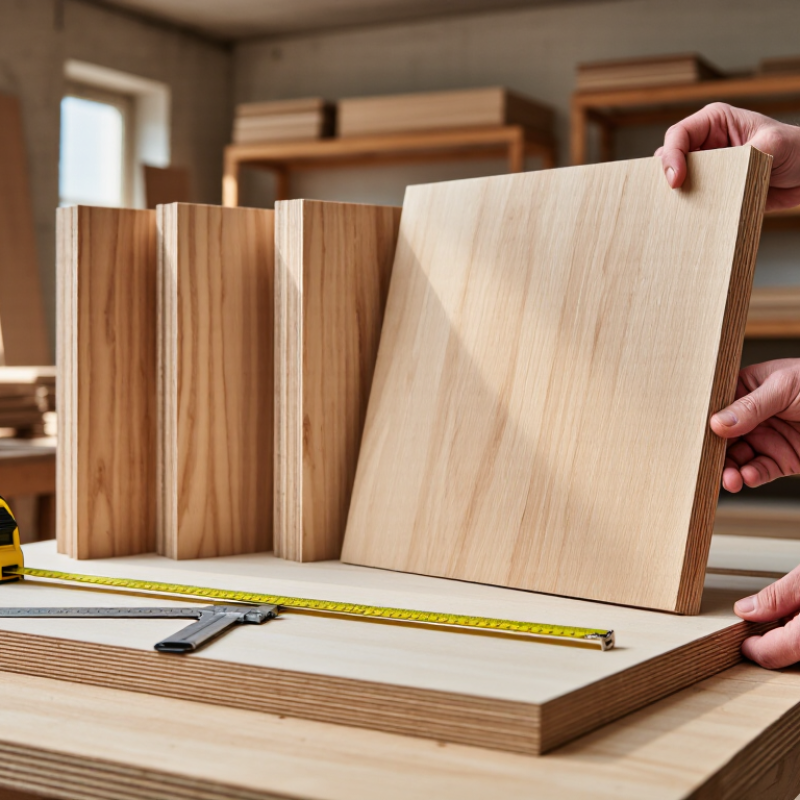
How to Choose Ordinary Plywood in 2026

Understand What Ordinary Plywood Is and Where It Will Be Used

How to Choose Ordinary Plywood in 2026

Ordinary plywood is made by bonding thin wood veneers, usually with neighboring layers’ grain running in different directions. The USDA Forest Products Laboratory’s Wood Handbook explains this cross-grain construction, which helps panels resist movement. “Ordinary” is not a precise performance grade, though. Check the panel’s grade, thickness, and bonding classification rather than relying on its general name. The label alone can mislead.

Start with the location. For a dry cabinet back or indoor shelving, an interior-rated panel may be suitable. A shed wall or other damp setting needs a panel rated for that exposure, plus suitable edge protection. Moisture changes everything. FAO’s Global Forest Products Facts and Figures 2023 reports 401 million cubic metres of wood-based panels produced worldwide in 2022. That category includes several panel types, not plywood alone, but it shows why product specifications matter across a broad market. Also consider load, span, and finish; a smooth face does not guarantee structural suitability.

Tips: Check the grade stamp and ask for the technical sheet. Inspect the edge for gaps, delamination, and uneven veneer layers. Check the edge. Compare the stated use with your project’s conditions, especially near floors, roofs, or plumbing. A small sample can reveal sanding and paint results, but it cannot prove long-term durability. I would not choose by price alone; the right panel still depends on the actual exposure and support.

Compare Plywood Grades, Veneer Quality, and Core Types

Choosing ordinary plywood starts with separating appearance from performance. Face grades describe visible defects, such as knots, patches, and splits; they do not always predict strength. Grade labels can also vary by standard, so check the product specification rather than relying on a letter alone. For a painted cabinet side, a patched face may be perfectly practical. For a clear finish, uneven grain or filler can remain visible. Look closely.

Veneer quality affects both appearance and surface durability. Check that the face is reasonably smooth, with no lifting edges or deep sanding marks. Thin, inconsistent veneer may show through paint or wear quickly at corners. A small patch is not automatically a flaw; its placement and finish matter. View the panel in good light, not only under showroom lighting.

Core type changes how a sheet behaves. Veneer-core plywood is relatively light and holds screws well near its edges, but its layers can show at exposed sides. Lumber-core panels may suit shelves, though quality and stability vary. Particleboard-core panels often provide a smooth face, but edges need protection from moisture. Feel the panel edge. Then consider the job, finish, and support spacing together; choosing only by price is an easy mistake, and sometimes a costly one.

Choose Suitable Thickness, Panel Size, and Bonding Performance

How to Choose Ordinary Plywood in 2026

Choose Suitable Thickness, Panel Size, and Bonding Performance

Ordinary plywood is useful for cabinets, partitions, and indoor furniture, but the right panel depends on its job. Choose thickness according to span, support spacing, and expected load; a thin shelf may sag when heavily loaded. Check the panel’s stated dimensions, too. A small difference can affect a snug cabinet opening or leave an uneven edge. Measure the installation space before buying.

Panel size matters during transport and cutting. Full-size sheets can reduce joints on broad surfaces, while smaller panels are easier to carry through narrow stairways. Leave room for trimming, and inspect the face and edges for cracks, open layers, or swelling. A rough corner is easy to miss under store lighting.

Tips: Match the bonding grade to the expected moisture exposure. Interior-grade bonding suits dry rooms; occasional dampness can still damage ordinary plywood. Ask for the product’s grading details, and check that layers look firmly bonded along a cut edge. Labels vary, so verify the intended use rather than assuming every panel performs alike. I would still protect cut edges in a kitchen or utility room; that extra step is easy to forget.

Inspect Surface Quality, Safety Labels, and 2026 Standards

How to Choose Ordinary Plywood in 2026
Inspect Surface Quality, Safety Labels, and 2026 Standards

Check the sheet in bright, even light. Look for raised grain, open gaps, blisters, and patches that stand proud of the face veneer. Run a hand across the surface; rough spots may show through thin paint or laminate. Inspect the cut edge, too. Voids between plies can weaken a panel, even when its face looks tidy. Look closely. A clean surface is useful, but it cannot reveal every hidden core defect. Ask for the panel grade and intended use, and compare the grade stamp with the supplier’s paperwork.

For panels sold in the United States, check whether the product is regulated as hardwood plywood under TSCA Title VI. The U.S. Environmental Protection Agency’s 2016 final rule sets its formaldehyde emission limit at 0.05 parts per million; the limits are 0.09 ppm for particleboard and 0.11 ppm for medium-density fiberboard. The EPA also requires covered products to carry compliance labeling and undergo third-party certification. Read the label for the product type, producer or importer, production date, and certifier. In 2026, confirm that the panel meets the requirements applying in your location and application; a label alone does not establish structural suitability. I would still double-check the paperwork—stamps can be hard to read, and assumptions are easy to make at a busy lumber counter.

How to Choose Ordinary Plywood in 2026 - Inspect Surface Quality, Safety Labels, and 2026 Standards

Use this checklist to compare ordinary plywood panels. Requirements depend on the product, intended use, and local regulations; check the panel’s grade stamp and current rules in your market.

Inspection Dimension What to Check Acceptable Finding Warning Signs Why It Matters
Face veneer and surface Inspect both faces in good light for splits, open knots, patches, sanding marks, and rough areas. Match the face grade to the intended finish. A reasonably even surface with defects consistent with the stated grade. Common U.S. PS 1 face grades range from A (smooth, more finished) through D (more visible defects). Unstated or inconsistent grade; large open defects where a smooth finish is required; damage that exposes inner plies. Surface grade affects appearance, finishing effort, and suitability for visible applications.
Panel edges and plies Look along the edges for gaps, separated plies, voids, and uneven bonding. Layers appear firmly bonded, with no obvious delamination or large edge voids. Peeling layers, loose veneers, extensive voids, or swollen edges. Bonding and core defects can reduce durability and make fastening or finishing less reliable.
Flatness and handling damage Place the panel on a flat surface and check for bowing, twisting, crushed corners, and impact damage. The panel is reasonably flat and free of damage that would interfere with installation. Severe warp, broken corners, deep dents, or moisture-related swelling. Distortion can complicate installation and may indicate poor storage or damage.
Grade and intended use Read the grade, panel type, and use markings. Check whether the panel is intended for structural or non-structural use. The markings match the project requirements. In the United States, PS 1 and PS 2 are separate plywood and performance-rated panel standards; the applicable one depends on the product. No legible identification, a grade unsuitable for the application, or a claim that cannot be verified. A panel’s appearance alone does not establish its structural rating or permitted use.
Bond classification Check the bond or exposure classification and compare it with the expected moisture conditions. The marked classification is appropriate for the project. “Exposure 1” is intended for limited construction exposure, not permanent weather exposure. Using an interior-bond panel where repeated wetting or exterior exposure is expected. Bond classification describes resistance to moisture exposure; it does not make every panel waterproof.
Formaldehyde emissions label Look for the required emissions statement or certification for the sales market and product category. For regulated composite wood products sold in the United States, verify applicable TSCA Title VI compliance. U.S. limits for hardwood plywood are 0.05 ppm; the applicable limit and category depend on the product. Missing, unclear, or unverifiable compliance information where labeling is required. Emissions requirements help limit formaldehyde released from regulated composite wood products.
Other market-specific standards For products sold outside the United States, check the applicable national rules and product documentation. Documentation identifies the relevant standard and intended use. In the European market, EN 13986 covers wood-based panels for construction; applicable requirements depend on the product and use. Assuming a standard or label from one market automatically satisfies another market’s rules. Standards and legal labeling requirements vary by region and may be updated; confirm the current version for the 2026 purchase.
Thickness and dimensions Measure the panel and compare its stated thickness, length, and width with the project specification. Dimensions match the product documentation and the project’s fit requirements. Unexpected variation, damaged edges, or dimensions that do not match the stated product. Nominal and actual dimensions can differ; confirm the specified measurement before cutting or installation.
Storage condition Check whether panels are stored flat, dry, and protected from standing water and direct weather exposure. Panels are clean, dry to the touch, and stored with support that helps prevent warping. Water stains, mold-like growth, swollen edges, or panels left exposed to rain. Correct storage helps preserve panel shape and condition before installation.

Match the Final Plywood Choice to Your Budget and Project Conditions

Choosing ordinary plywood is not just a matter of comparing sheet prices. Match the panel to the room, the load, and the finish you need. For a painted cabinet inside a dry home, a smooth face may matter more than a premium appearance on both sides. For shelves, check the planned span and support; a thin panel can sag under books, even when its surface looks sound. Measure twice. Ask the supplier how the grade is labeled, since terms can vary.

Moisture changes the decision. In a damp area, confirm that the panel is rated for the expected exposure, and protect cut edges as specified. Do not assume that a higher price alone guarantees a better fit. Inspect the sheet edges for visible gaps, check for bowing, and consider how much material your cuts will waste. Not just sheet price. Include fasteners, finish, delivery, and a spare piece in the budget. I would leave room for a cutting mistake; neat plans do not always produce neat cuts. If the project is load-bearing or exposed to persistent moisture, check the product documentation or ask a qualified professional before buying.

How to Choose Ordinary Plywood in 2026

Match the final plywood choice to your budget and project conditions.

Panel volume by nominal thickness is calculated for one 4 × 8 ft (1219.2 × 2438.4 mm) sheet. Thicker panels contain more material and generally cost more, but price also depends on grade and local supply. Choose thickness for the required span and load, and check the panel’s exposure rating for the project environment. Volume alone does not indicate strength or moisture resistance.

bottom of page