What Is the Best Type of Slat Bed Frame in 2026?
Choosing the best Slat Bed Frame in 2026 means looking beyond its finish or price. The right frame should support your mattress evenly, suit your room, and stay quiet through nightly movement. A low price can look appealing, but thin slats, wide gaps, or a weak center rail may cause trouble later.
Sleep specialist Dr. Michael Breus often emphasizes that sleep needs differ from person to person. A practical paraphrase of that advice is: “Choose a sleep setup that fits your needs, not just the trend.” This is not a verbatim quotation about bed frames. For slatted bases, the mattress maker’s spacing and support requirements are essential checks.
Details matter. Picture the frame under an 11-inch mattress: closely spaced, sturdy slats can provide steadier support, while a flexible design may feel different beneath foam or latex. Check the center support, slat material, weight rating, and assembly instructions. Listen for creaks. Look for rough edges and slats that shift when pressed.
There is no single best frame for every sleeper. Some buyers may prefer solid wood and a firm feel; others may value adjustability or easy assembly. And product descriptions can be vague. This guide compares common frame types, explains their trade-offs, and shows what to verify before buying. A little skepticism helps. The best choice is the one that supports your mattress as specified and feels dependable in your actual bedroom.
What Defines a Slat Bed Frame and How Its Components Work
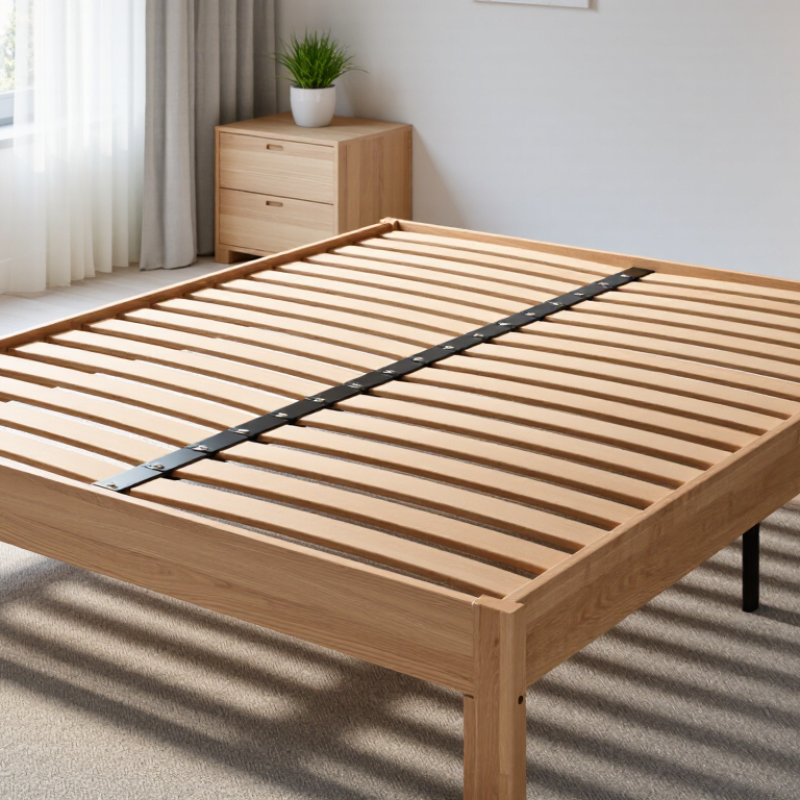
A slat bed frame supports a mattress with parallel boards or narrow panels instead of a solid platform. Its main parts are the side rails, end rails, slats, center beam, and legs. Rails hold the frame square; slats spread the load, while a center beam limits sagging on wider beds. The details matter. A slat that bows, shifts, or sits too far from its neighbor can leave a mattress poorly supported. Sleep Foundation guidance commonly recommends gaps no wider than about 2.75 inches, though mattress makers may set stricter limits.
Slats may be solid wood, engineered wood, or metal. Their width, thickness, spacing, and attachment all affect how the frame performs. The USDA Forest Products Laboratory’s Wood Handbook reports average wood shrinkage of roughly 8% tangentially and 4% radially from green to oven-dry; actual movement varies by species and conditions. That movement helps explain why wood slats can loosen or creak as room humidity changes. Small shifts matter. Check for a center support on wider frames, secure slat fittings, and smooth edges that will not catch fabric. I’d still inspect the actual frame: a tidy diagram cannot show every weak joint.
What Defines a Slat Bed Frame? Standard U.S. Mattress Dimensions
How the components work: Slats run across the frame to support the mattress, while side rails hold the frame together. Wider beds may also use a center beam and support legs to reduce the distance the slats span. Choose slat spacing and support to match your mattress maker’s requirements; frame dimensions alone do not determine the best design.
Dimensions shown are common U.S. mattress sizes in inches; actual product dimensions may vary.
Which Slat Bed Frame Types Are Available in 2026
In 2026, slat bed frames mainly come in rigid, sprung, and roll-up designs. Rigid slats use fixed wooden or metal strips, giving mattresses a steady, even platform. They suit people who prefer a firmer feel and fewer moving parts. Sprung slats curve slightly under weight, adding a little give beneath the mattress. Roll-up slats connect with fabric and can be practical in tight rooms or for moving. Simple, but not identical.
Fit matters as much as frame type. The National Bed Federation’s bed-buying guidance recommends keeping slat gaps to about 7 centimetres or less, helping prevent inadequate mattress support. Check the mattress maker’s requirements too; some materials need closer spacing. Grand View Research’s 2024 global bed-market report estimated the overall bed market at about 31 billion US dollars in 2023, but it does not break sales down by slat design. So market growth cannot tell you which frame will feel right. Measure the inner frame, inspect the slat spacing, and press down across the centre. A frame may look sturdy and still flex more than expected. That small test is easy to forget.
How Slat Designs Differ in Support, Durability, and Airflow
A slat frame’s support depends on more than its material. Closely spaced, rigid slats create a steadier platform for many foam mattresses; flexible sprung slats can add a little give. Check the mattress maker’s required gap and center support before buying. A gap that looks small in a showroom may still be too wide for a particular mattress.
Durability comes from sound joints, adequate center legs, and slats that resist bowing under repeated use. ASTM F1566-22 describes repeated-load durability tests for mattresses, not a universal lifespan rating for bed frames. That distinction matters. Ask whether a frame has been load-tested, and inspect the joints and slats periodically; a creak can signal loosened hardware, though it is not proof of failure.
Airflow is another design trade-off. Open slats leave space beneath the mattress, while a solid platform allows less circulation. The U.S. Environmental Protection Agency’s moisture-control guidance recommends indoor relative humidity between 30% and 50%, and below 60%, to discourage mold growth. Slats cannot control room humidity, but open space may help air move under the bed. In a damp bedroom, ventilation alone may not solve the problem. A dehumidifier or better room ventilation could matter more.
Which Slat Type Best Matches Each Mattress and Sleeping Need
A slat frame should support the mattress, not fight it. For memory foam or latex, choose rigid slats with narrow, even gaps. Wide gaps can let foam dip between boards and create uneven support. Check the mattress maker’s spacing guidance before buying. Details matter.
Sprung slats curve slightly under pressure. They can add a softer feel for lighter sleepers or people who prefer a little give beneath the shoulders and hips. But the result depends on slat tension and mattress design. A very soft mattress on flexible slats may feel too yielding, especially near the middle of the bed. Try pressing several slats by hand; uneven flex is worth questioning.
For heavier sleepers, couples, or mattresses that need a firm base, closely spaced, sturdy slats are often a practical choice. A center rail and support legs can reduce sagging across wider frames. Innerspring mattresses may work with either rigid or sprung slats, provided the gaps are suitable. There is no perfect pairing. Room humidity, frame wear, and personal comfort can change how a setup feels over time, so inspect the slats occasionally and reassess if the mattress develops dips.
