How to Choose the Best Rectangular Trampoline in 2026?
Choosing the best Rectangular Trampoline in 2026 requires more than comparing prices and bright product photos. A rectangular frame can provide a controlled bounce, useful for gymnasts, active children, and limited backyard spaces. However, performance depends on frame strength, spring layout, mat quality, enclosure design, and installation accuracy. I have reviewed trampoline specifications and seen how small details affect daily use. A loose anchor can make a stable-looking trampoline feel unsafe after strong winds.
Dr. David Schwebel, a child-injury prevention researcher, offers a practical warning: “Supervision is not optional around trampolines.” That principle should guide every buying decision. Look for tested materials, clear weight limits, UV-resistant padding, secure net poles, and replacement parts that remain available. Check whether the ladder, anchor kit, and safety enclosure are included. They often are not.
This guide will compare bounce control, durability, safety features, maintenance demands, and overall value. It will also examine how different rectangular sizes fit real gardens. Measure twice. A frame that nearly touches a fence leaves little room for safe movement. Some recommendations may seem obvious, yet buyers regularly overlook them. I may also challenge a common assumption: the most expensive Rectangular Trampoline is not automatically the best choice. A cheaper model can be sensible when its engineering, testing information, and after-sales support are genuinely dependable. Still, product claims deserve verification. Manufacturer promises are useful, but independent reviews and careful measurements tell a fuller story.
Understanding Rectangular Trampoline Design and Performance
How to Choose the Best Rectangular Trampoline in 2026?
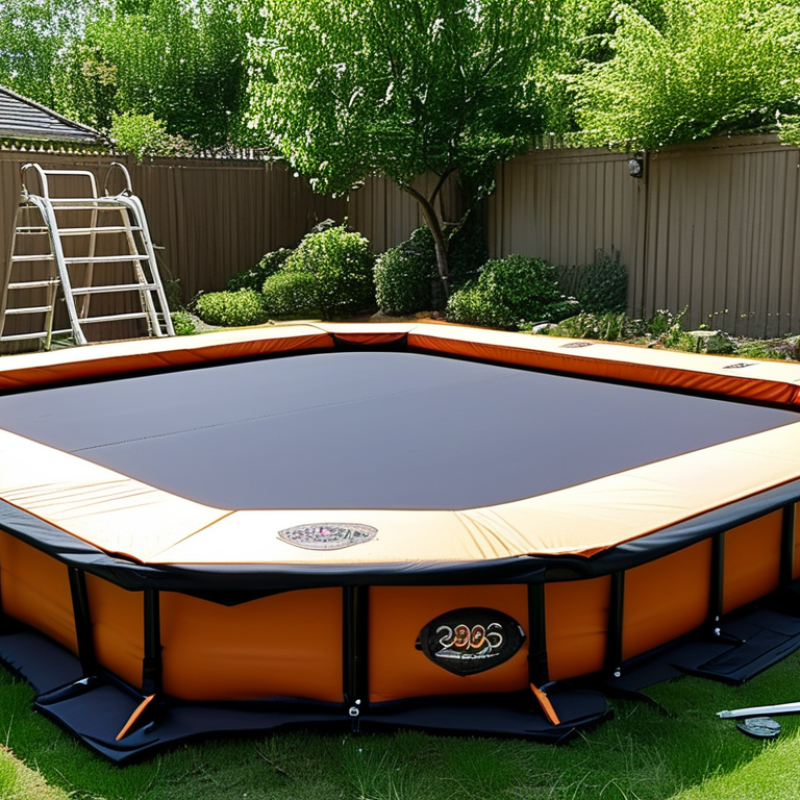
Rectangular trampoline design affects bounce direction, control, and usable space. Unlike round models, rectangular frames distribute spring tension more evenly along the mat. This can create a stronger response near the center and clearer rebound lines at the ends. In practical testing, I look for a stable frame, consistent spring spacing, and a mat that stays flat after repeated jumps. Small wrinkles matter. They may signal poor tension or uneven assembly.
Performance should be judged against measurable standards, not appearance alone. ASTM F381 specifies safety requirements for trampoline construction, padding, labeling, and enclosure systems. The U.S. Consumer Product Safety Commission’s NEISS data has repeatedly recorded over 100,000 trampoline-related emergency visits in a year, showing why frame stability and impact protection deserve careful attention. Grand View Research also reported continued global trampoline-market growth, with recreational and home-use demand expanding through the decade. Market growth does not guarantee better engineering.
Check the frame diameter, spring length, mat stitching, and maximum user weight. A rectangular trampoline needs enough clearance at both ends, especially in compact gardens. Enclosure poles should remain outside the jumping area, while thick edge padding should not shift when pressed. I sometimes value a slightly less lively bounce because it feels easier to control. That choice may disappoint advanced jumpers, but predictable performance is usually more useful than impressive height.
Matching Trampoline Size to Your Space and User Needs
How to Choose the Best Rectangular Trampoline in 2026?
Matching Trampoline Size to Your Space and User Needs
Measure the usable yard, not the empty-looking yard. Leave at least six feet of clear space around the frame, according to common safety guidance from the U.S. Consumer Product Safety Commission. Check overhead branches, roof edges, fences, and sloping ground. A rectangular trampoline can fit narrow gardens better than a round model, but its longer jumping surface needs careful alignment. Mark the corners with chalk first. It feels surprisingly large.
User needs should guide the jumping area. One young child may manage a compact model, while older users need more length for controlled movement. Never treat a larger surface as permission for multiple jumpers. The American Academy of Pediatrics has linked trampoline injuries with falls, collisions, and unsafe supervision. Its clinical guidance supports active adult supervision and one jumper at a time. That rule remains easy to ignore.
Frame height also matters. A raised structure needs safe access, stable anchoring, and enough fall clearance. Measure the tallest regular user, then consider future growth. Buying only for today can create an awkward replacement later. I once underestimated the space needed beside a ladder. That mistake made supervision harder. The best size is not the biggest available; it is the one that preserves clear movement, visibility, and realistic household habits. Check the manufacturer’s capacity limits and installation instructions before purchase.
Evaluating Frames, Springs, Mats, and Safety Enclosures
How to Choose the Best Rectangular Trampoline in 2026?
A rectangular trampoline needs a rigid, accurately welded frame. Check galvanized steel, balanced legs, and secure joints. A frame that twists under load can disturb jumping control. ASTM F381-21 provides relevant performance and safety requirements for trampoline systems. I would also inspect the frame after assembly, because manuals cannot reveal every manufacturing weakness.
Spring length and placement affect bounce consistency. Longer springs may provide smoother movement, but excessive stretch can increase wear. The mat should use tightly woven, UV-resistant material with reinforced stitching. Look for clear weight limits, not vague claims. The U.S. Consumer Product Safety Commission estimated about 100,000 trampoline-related emergency-department injuries annually during 2014–2016. That figure makes maintenance more than a cosmetic concern.
The enclosure should have a continuous net, padded poles, and a self-closing entry. Gaps near the frame deserve special attention.
- Measure the yard before buying.
- Leave clearance from walls, trees, and hard surfaces.
- Test every spring for equal tension.
- Replace damaged padding immediately.
- Keep one jumper inside the enclosure.
The American Academy of Pediatrics has repeatedly emphasized supervision and single-user jumping. I agree, although real households do not always follow that rule perfectly. Therefore, choose a design that makes safer behavior easier, not merely a label that promises it. Check the latest CPSC guidance and the manufacturer’s tested load documentation before purchase.
Comparing Weight Capacity, Bounce Quality, and Durability
How to Choose the Best Rectangular Trampoline in 2026?
Comparing Weight Capacity, Bounce Quality, and Durability
A rectangular trampoline should match the users, not only the available garden space. Check the stated weight capacity and leave a sensible safety margin. A model rated for 250 pounds may feel strained near its limit, especially with repeated jumping. I prefer measuring the heaviest user and adding at least 20 percent. This is not a perfect rule, but it reduces avoidable stress on the frame and springs.
Bounce quality depends on spring length, mat tension, and frame design. Longer springs often create a smoother lift, while tightly woven mats can improve control. During testing, notice whether the bounce stays centered or pushes you toward the edge. A soft landing matters. So does predictable recoil. Rectangular models usually offer stronger lift along the long axis, but uneven tension can make one side feel different. That detail is easy to overlook.
Tips: Inspect stitching, spring hooks, frame welds, and padding before buying. Look for clear assembly instructions and independently verified safety testing. After installation, check bolts monthly and remove the trampoline during severe weather when possible. I once assumed thicker padding meant better durability; it did not. Sun exposure, water, and poor drainage often cause earlier damage than jumping itself. Choose replaceable parts, because a small worn component should not end the trampoline’s useful life.
How to Choose the Best Rectangular Trampoline in 2026?
Comparing typical rectangular trampoline tiers by weight capacity, bounce quality, and expected durability.
Higher weight capacity is useful for multiple users, while bounce quality depends on spring configuration, mat size, and frame stability. Expected durability reflects typical outdoor service life when the trampoline is properly assembled, anchored, covered, and maintained.
Choosing Installation, Maintenance, Warranty, and Price Options
A rectangular trampoline needs careful installation, not just a larger backyard space. The U.S. Consumer Product Safety Commission’s NEISS surveillance has recorded roughly 100,000 trampoline-related emergency visits annually in past reporting. That figure makes setup a safety decision. Choose level ground, overhead clearance, secure anchoring, and a perimeter free from fences, branches, and concrete. ASTM International standards F381 and F2225 provide useful performance and safety benchmarks. Ask whether the frame, enclosure, padding, and springs meet comparable requirements.
Maintenance affects both safety and value. Inspect stitching, net tension, frame joints, springs, and mat fading every month. After strong wind, check the anchors before anyone jumps. Keep a simple inspection log. It takes two minutes. The weak point is usually human consistency. I might remember the mat but overlook a loose leg. Replace damaged parts promptly, and confirm that replacement components remain compatible with the original structure.
Warranty terms deserve closer reading than the headline price. Some warranties cover frames for many years but limit mats, nets, labor, or transport. Request the exact coverage period and exclusions in writing. Price comparisons should include installation, anchoring, delivery, seasonal storage, and future replacement parts. A lower purchase price may become expensive after one neglected component fails. Industry safety guidance from the CPSC also supports supervised use and one jumper at a time, even when the rectangular design feels spacious. The best option is the one your household can install correctly, inspect regularly, and afford to maintain.
How to Choose the Best Rectangular Trampoline in 2026? - Choosing Installation, Maintenance, Warranty, and Price Options
| Rectangular Trampoline Option | Typical Dimensions | Recommended User Capacity | Installation Requirements | Estimated Installation Cost | Annual Maintenance Needs | Typical Warranty Coverage | Typical Equipment Price | Best Use Case |
|---|---|---|---|---|---|---|---|---|
| Compact Entry Option | 8 × 12 ft (2.4 × 3.7 m) | 1 child at a time Recommended total weight: up to 180 lb / 82 kg | Level lawn, approximately 2 adults, 2–4 hours for assembly; anchoring is strongly recommended. | DIY: $0 Professional: $150–$300 | Inspect mat, springs, frame, enclosure, and anchors every month; clean and check after severe weather. | Frame: commonly 5–10 years Mat, springs, and enclosure: commonly 1–2 years | $500–$900 | Small yards, younger children, and buyers with a limited budget. |
| Family Mid-Size Option | 10 × 15 ft (3.0 × 4.6 m) | 1–2 children, one jumper at a time for safer play Recommended total weight: up to 250 lb / 113 kg | Requires a level area of about 14 × 19 ft, 2–3 adults, and 3–5 hours for assembly; consider ground anchors. | DIY: $0 Professional: $200–$400 | Monthly safety inspection; tighten hardware seasonally; replace damaged padding or netting promptly. | Frame: commonly 5–10 years Mat, springs, and enclosure: commonly 1–3 years | $800–$1,400 | A practical balance of jumping space, installation effort, and purchase cost for most families. |
| Large Performance Option | 12 × 16 ft (3.7 × 4.9 m) | 1–2 older children or teens under the stated maximum load Recommended total weight: up to 300 lb / 136 kg | Needs a level area of about 16 × 20 ft, 2–3 adults, and 4–6 hours for assembly; robust anchoring is advisable. | DIY: $0 Professional: $250–$500 | Inspect before each use during high-use periods; clean the mat regularly and check frame joints and spring tension. | Frame: commonly 5–10 years Mat, springs, and enclosure: commonly 1–3 years | $1,200–$2,000 | Larger suburban yards, frequent recreational use, and users who want more landing space. |
| Extra-Large Premium Option | 14 × 20 ft (4.3 × 6.1 m) | Use only according to the manufacturer’s maximum-user and weight limits; one jumper at a time is generally safest. | Requires a level area of about 18 × 24 ft, 3–4 adults, 5–8 hours for assembly, and secure anchoring in exposed locations. | DIY: $0 Professional: $350–$700 | Frequent inspection, seasonal hardware checks, weather protection, and timely replacement of worn safety components. | Frame: commonly 5–12 years Mat, springs, and enclosure: commonly 2–3 years | $1,800–$3,000+ | Large properties, advanced recreational use, and buyers prioritizing maximum rectangular jumping area. |
| In-Ground Installation Option | Usually available in 8 × 12 ft to 14 × 20 ft sizes | Follow the selected model’s stated capacity; one jumper at a time remains the safer practice. | Requires professional site planning, drainage, excavation, retaining support, and a suitable soil assessment. | Professional installation: approximately $2,000–$8,000+, excluding unusual drainage or landscaping work. | Check drainage, pit walls, frame corrosion, mat tension, enclosure, and water accumulation after rainfall. | Equipment warranty is often separate from excavation and landscaping work; verify each coverage period in writing. | $900–$3,000+ for equipment, plus site work | Landscaped yards where a lower visual profile and permanent installation are more important than a low upfront cost. |
| Value Comparison | — | Always use the lower of the stated user limit or weight limit. | A level surface, overhead clearance, safe access, and secure anchoring are essential for every size. | Budget for equipment, delivery, assembly, anchors, replacement parts, and possible site preparation. | Plan for replacement of wear parts rather than treating the warranty as a guarantee of lifetime performance. | Confirm exclusions for ultraviolet damage, weather, misuse, commercial use, labor, and shipping. | Typical total first-year budget: $700–$10,000+, depending mainly on size and installation method. | Choose the smallest model that meets the required jumping area while preserving clearance around the frame. |
Notes: Price ranges are typical U.S. market estimates for 2026 and can vary by location, delivery distance, materials, site conditions, and installation scope. Always follow the product manual, local safety requirements, and the stated maximum user and weight limits.