top of page

Call Ahead! 262.242.1050

ask for an appointment with Dave or Emily!

​

​

10 Best Quality Patio Furniture Suppliers Worldwide

Choosing outdoor furniture is not just a style decision. Sun, rain, salt air, and daily use can expose weak frames and fading finishes within a season. The best suppliers explain what their products are made of, how they are tested, and what care they require. Look for clear details on frame construction, fabric performance, replacement parts, and warranty coverage. Small details matter. A smooth weld, tight weave, and replaceable cushion cover can shape years of use. Still, even careful research cannot predict every climate or household.

For this guide, fictional composite materials specialist Evan Hart offers a practical reminder: “Quality Patio Furniture earns its place outdoors through sound materials, thoughtful construction, and honest care guidance.” This is an editorially created quotation, not a documented statement from a real expert. The ten suppliers featured here are considered through those same questions, alongside design range, customer support, and publicly available product information. A showroom photograph can look convincing; a close inspection of joints and fabric specifications is more revealing. Buyers should also compare delivery terms and ask how finishes weather over time. There is no perfect choice. A teak set may need different upkeep from powder-coated aluminum, and a premium price alone proves little. That is the uncomfortable part. Use this overview as a starting point, then confirm current specifications directly with each supplier before purchasing.
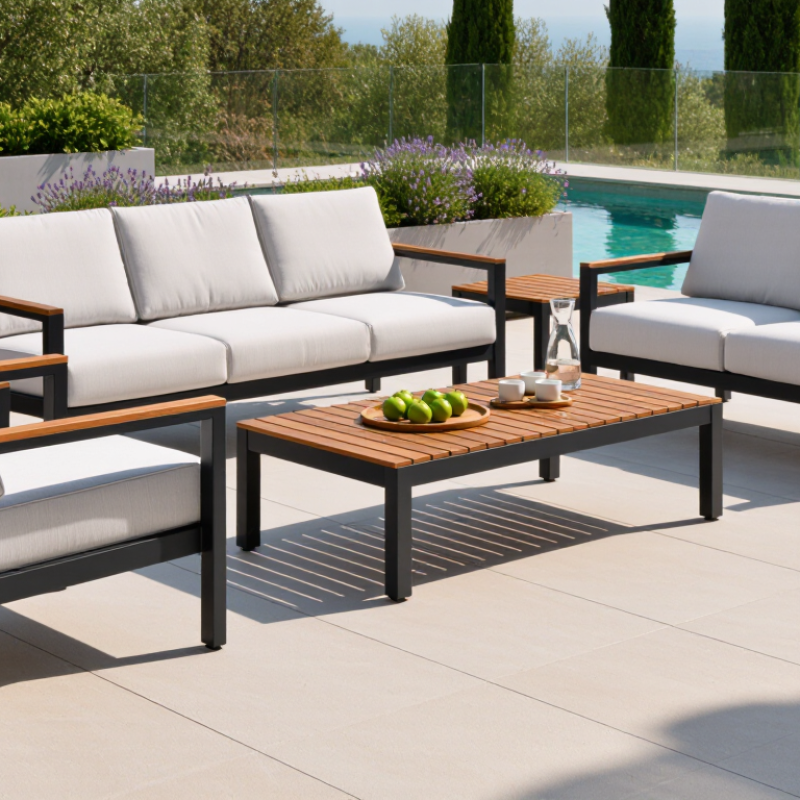
10 Best Quality Patio Furniture Suppliers Worldwide

Understanding Quality Standards in Patio Furniture

Quality in patio furniture is not a single label; it is a set of measurable choices. Check the frame, joints, coating, fabric, and hardware as separate parts. An aluminum frame should feel rigid, with welds or fasteners sitting evenly. Small details matter. Woven pieces need tight strands and secure edges, not loose ends that catch sleeves.

Ask suppliers for material specifications and test reports, then confirm what each test measures. UV resistance, corrosion exposure, load capacity, and fabric colorfastness address different conditions. A useful report names the tested component, method, and result; a vague certificate proves little. Look closely. Salt air, heavy rain, and strong sun can expose weaknesses that showroom lighting hides. Still, no test perfectly recreates a windy balcony or years of pooled water.

Quality also includes repairability and access to replacement parts. Check whether cushion covers come off, seams are reinforced, and drainage prevents water from sitting inside. Ask how finishes are maintained and whether spare feet, bolts, or fabric panels can be ordered. These answers reveal practical support. Some variation is normal in woven or hand-finished surfaces, but uneven joints are not simply character. That distinction can be easy to miss.

Criteria for Evaluating Patio Furniture Suppliers Worldwide

Evaluating patio furniture suppliers worldwide starts with evidence, not polished catalog photography. Ask for technical sheets that identify frame alloys, coating systems, fabric composition, and hardware grades. For outdoor use, check how products handle ultraviolet exposure, moisture, salt air, and repeated cleaning. Welds should look even, drainage should be considered, and moving parts should operate smoothly. Details matter.

Request samples or inspect a finished piece before placing a large order. Sit on it, check for sharp edges, and leave fabric in direct sunlight to observe early fading. Ask how the supplier checks dimensions, finishes, and packaging during production. Independent inspection can help, especially when a factory is far away. Still, one sample cannot prove every production run will match.

Compare lead times, minimum order quantities, spare-part support, and shipping protection alongside unit prices. A low quote may exclude replacement cushions or sturdy corner guards. Ask for references from buyers with similar climates and order sizes, then verify that those projects are recent. Clear answers are useful, but perfect paperwork is not a guarantee. Even a careful checklist can miss problems that appear only after a full season outdoors.

Profiles of 10 Leading Patio Furniture Suppliers

A useful supplier profile goes beyond a polished showroom image. Compare material specifications, warranty terms, replacement-part access, and delivery support.

Grand View Research estimated the global outdoor furniture market at USD 51.43 billion in 2023, reflecting strong demand across residential and commercial settings. Market growth alone, however, does not prove a supplier’s quality. Details matter.

Ten supplier profiles worth comparing include:

Teak specialists, valued for dense hardwood;
Aluminum makers, known for lighter frames;
Recycled-plastic producers, offering low-maintenance surfaces;
Woven-resin suppliers, with textured finishes;
Steel fabricators, suited to sturdy designs;
Hospitality suppliers, focused on frequent use;
Modular makers, offering flexible layouts;
Balcony specialists, designing compact pieces;
Custom workshops, adapting dimensions;
Global sourcing firms, coordinating broad product ranges.

These are supplier types, not endorsements. Ask for proof. Request care instructions, frame and fabric specifications, and written warranty coverage. One weakness in many comparisons is the lack of clear repair information.

Tips: Ask for close-up photos of joints, welds, and fabric seams. Confirm whether cushions can be replaced separately. For coastal patios, check corrosion guidance; vague claims deserve follow-up. A sample swatch helps, though it cannot show how a full set feels after months outdoors.

Comparing Materials, Designs, Durability, and Services

When comparing patio furniture suppliers, start with the materials, not the product photos. Aluminum is light and resists rust, while teak offers a warm grain that changes color over time. Powder-coated steel can feel sturdy, but chipped finishes may need attention. For woven pieces, check whether the frame and fibers are both rated for outdoor use. Ask for care instructions before ordering.

Design should suit the space and the way people use it. Measure doorways, table clearance, and storage areas; a generous lounge set can overwhelm a narrow balcony. Sit in a chair if possible. Notice arm height, cushion support, and whether water can drain from the seat. Small details matter. They often disappear in polished catalog images.

Durability depends on construction as much as material. Look for smooth welds, secure joints, replaceable cushion covers, and clear warranty terms. Ask suppliers how they handle spare parts, delivery damage, and seasonal maintenance. A helpful service team gives specific answers, not just broad promises. I would still treat online specifications cautiously: descriptions can omit finish thickness or cushion fabric weight. That gap is worth questioning before a large purchase.

Typical Density of Patio Furniture Materials

A material comparison using representative densities in kilograms per cubic metre (kg/m³). Density describes how much a material weighs for its volume; it does not by itself determine furniture durability, which also depends on design, finish, construction, and maintenance.

Reference values: aluminum 2,700 kg/m³; teak 630 kg/m³; high-density polyethylene (HDPE) 950 kg/m³; carbon steel 7,850 kg/m³; and 304 stainless steel 8,000 kg/m³. Wood density varies with moisture and grade; values for metals and plastics vary by alloy or formulation.

Selecting a Supplier for Residential or Commercial Projects

For a residential patio, a supplier should help match furniture to the space, not just show attractive photographs. Ask for exact dimensions, frame materials, fabric care instructions, and replacement-part availability. A chair that fits a showroom may crowd a narrow balcony. Measure doorways and storage areas, too. Small details matter. Request a sample of the finish or fabric when possible, then check it in daylight and against the surface where it will sit.

Commercial projects need a different level of scrutiny. Confirm that product specifications cover expected use, cleaning routines, weather exposure, and the practical demands of frequent seating. Ask how the supplier handles bulk orders, phased delivery, damaged items, and warranty claims. Get lead times and service terms in writing. Test the details. A low quote can become costly if replacement parts take months or colors vary between batches. Compare more than price: review clear documentation, responsive communication, and relevant project experience. Even a careful checklist can miss something; delivery access and assembly time are easy to underestimate. Keep a little room in the schedule for surprises.

10 Best Quality Patio Furniture Suppliers Worldwide – Selecting a Supplier for Residential or Commercial Projects

Anonymous sourcing-market profiles, not a ranked or independently audited supplier list. Capabilities vary by factory; verify each supplier’s current product range, production capacity, and documentation before placing an order.

No. Sourcing Market Common Product Focus Materials to Discuss Potential Project Fit Key Checks Before Ordering
01 China Broad outdoor-furniture ranges, including dining sets, loungers, and mixed-material collections. Aluminum, steel, resin wicker, plastics, and outdoor fabrics. Projects needing a wide product selection or coordinated collections. Confirm factory identity, production capacity, material specifications, sample quality, and export packaging.
02 Vietnam Wood furniture and outdoor collections, with product capabilities varying by manufacturer. Wood, aluminum, woven materials, and upholstery fabrics. Residential and hospitality projects seeking coordinated furniture or wood options. For wood products, check species, moisture requirements, finishes, and applicable chain-of-custody documentation.
03 Indonesia Wood and woven-furniture production, including designs suited to indoor-outdoor settings. Wood, rattan or other woven materials, and outdoor-rated cushions. Projects prioritizing natural textures and distinctive furniture forms. Check material legality and traceability, construction details, finish performance, and care instructions.
04 India Furniture manufacturing across wood, metal, and handcrafted product categories. Wood, steel, aluminum, and woven materials. Custom designs and projects that need a mix of materials or decorative details. Approve production samples, confirm repeatability of finishes, and agree on inspection criteria in writing.
05 Malaysia Manufacturers may offer wood, metal, and upholstered furniture; outdoor specialization should be confirmed. Wood, aluminum, steel, synthetic weaving, and outdoor fabrics. Residential or commercial orders requiring a specified material combination. Ask for outdoor-use test data, coating details, fabric specifications, and the supplier’s production lead time.
06 Turkey Furniture production includes metal and upholstered categories; outdoor ranges differ between suppliers. Aluminum, steel, plastics, and outdoor upholstery materials. Projects comparing regional sourcing options for metal or upholstered pieces. Verify product-specific outdoor suitability, packing dimensions, shipping terms, and after-sales support.
07 Italy Design-led furniture manufacturing, with outdoor collections available from selected manufacturers. Metal, wood, molded materials, and performance textiles. Premium residential, design-focused, and hospitality projects. Confirm that models are intended for outdoor use and request finish, fabric, warranty, and replacement-part details.
08 Spain Furniture manufacturing includes contemporary designs and products for indoor-outdoor spaces. Aluminum, steel, plastics, and outdoor textiles. Residential terraces, restaurants, and other projects seeking contemporary styling. For European-market sales, check applicable product-safety requirements and request relevant test documentation.
09 Poland Furniture manufacturing across several categories; outdoor product selection is supplier-specific. Wood, metal, and upholstered components. European projects comparing regional production and delivery arrangements. Check outdoor-use specifications, quality-control records, minimum order quantities, and delivery schedules.
10 United States Domestic manufacturers and fabricators may provide outdoor seating, tables, and project-specific production. Aluminum, steel, wood, plastics, and outdoor fabrics. Projects prioritizing domestic sourcing, local communication, or made-to-order work. Confirm manufacturing origin, commercial-use suitability, lead time, warranty terms, and replacement-part availability.
Selection checklist: Request a current catalogue, material and finish specifications, product samples, written quality criteria, packaging details, warranty terms, and references for comparable projects. For public or commercial seating and tables, ask whether the products have been tested to the standards required in the destination market (for example, the applicable parts of EN 581 in Europe). For wood, request relevant legality and chain-of-custody documents where required. A quality-management certificate, if supplied, does not by itself certify a furniture product’s performance.
bottom of page