10 Best Industrial Counter Stools for 2026
Choosing the right Industrial Counter Stool involves more than matching a dark metal frame to a modern kitchen. A strong option must support daily meals, quick coffee breaks, and long conversations without feeling unstable or uncomfortable. Seat height matters. For most standard counters, a stool around 24 to 27 inches high allows comfortable legroom.
Details matter.
This guide to the 10 Best Industrial Counter Stools for 2026 examines construction, comfort, maintenance, and practical value. Each model should be considered through its materials, weld quality, finish, footrest design, and weight capacity. Solid steel can provide dependable support, while wood seats may add warmth and reduce the harsh feel of metal. Upholstered cushions offer comfort, but they can collect crumbs and stains in busy homes.
Real use reveals more than photographs. A stool may look impressive online yet feel rigid after twenty minutes. Another may have minor finish flaws but offer better balance and support. That difference deserves attention. No stool is perfect.
The selections are based on product specifications, design credibility, user-focused features, and realistic household needs. They also consider whether each stool suits kitchen islands, workshops, cafés, or compact apartments. Buyers should still measure their counter, check floor protection, and confirm return conditions before ordering. Style can attract attention, but stability earns trust. Even the best-looking stool becomes frustrating when it rocks, scratches the floor, or leaves knees crowded beneath the counter.
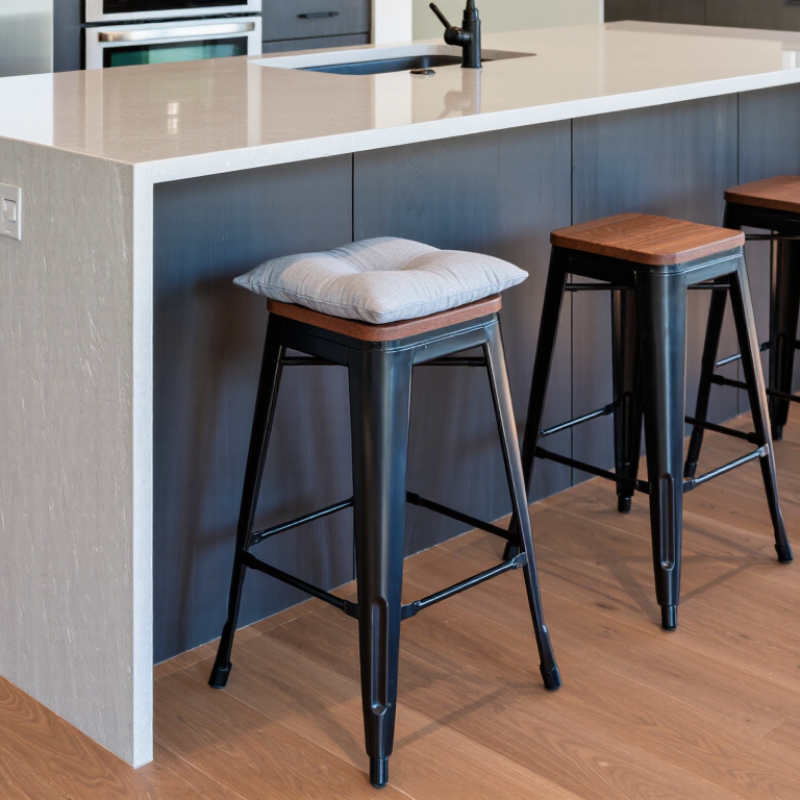
What Defines an Industrial Counter Stool in 2026
An industrial counter stool in 2026 is more than black steel and distressed timber. It must survive busy service, support varied bodies, and fit smaller, flexible spaces. The National Restaurant Association’s 2024 State of the Restaurant Industry report projected U.S. restaurant sales to reach $1 trillion. That scale raises the performance bar for every seat. Industrial means durable, not crude.
A credible stool specification should identify its seat height, weight rating, cleaning limits, and test standard. ANSI/BIFMA X5.1 includes stability, strength, and durability testing for commercial seating. For a 36-inch counter, a 24-to-26-inch seat usually supports comfortable leg clearance. A footrest should feel solid under work shoes, not flex after repeated use. Powder-coated steel, sealed wood, rounded welds, and replaceable glides add practical value.
Sustainability also changes the definition. The U.S. Environmental Protection Agency reported about 600 million tons of construction and demolition debris in 2018. Repairable frames and replaceable parts therefore deserve more attention than vague green claims. I would question every “hand-finished” promise. Some rough edges look authentic; others catch sleeves and collect grease. Comfort is less visible but decisive. A shaped seat and supportive back can reduce pressure during long meals. Not every space needs a swivel. I would reject any stool that looks industrial but ignores cleaning, stability, or real human posture.
Key Features to Compare Before Choosing a Counter Stool
Choosing an industrial counter stool requires more than admiring its dark metal frame. Seat height is the practical starting point. For a standard counter, a 24 to 27-inch seat usually leaves comfortable legroom. Measure your counter before shopping.
Material affects comfort, durability, and maintenance. Powder-coated steel resists everyday scratches, while solid wood adds warmth and may show natural movement over time. A sealed seat handles coffee spills better. However, no finish is completely maintenance-free.
Check the footrest carefully. It should support your feet without sharp edges or uncomfortable pressure. A welded steel bar feels stable during long breakfasts. I have found that thin footrests can become tiring surprisingly quickly. It is a small detail.
Seat shape matters during extended use. A slightly contoured seat often feels better than a perfectly flat one. If the stool includes a backrest, compare its height and angle. Low backs save visual space but may offer limited support. Tall backs feel more secure, yet they can crowd narrow counters.
Stability deserves close attention. Look for a wide base, level legs, and secure joints. A swivel mechanism should turn smoothly without wobbling. Test the stool on your actual floor if possible. Hard surfaces can expose movement that showroom carpets hide.
Consider cleaning habits, too. Kitchens need wipeable surfaces and hidden dirt traps. Textured finishes look attractive but may hold grease. Floor glides can prevent scratches and reduce dragging noise. I once ignored that feature, and the daily scraping became irritating. Load capacity should match real household use, not just an advertised maximum. Examine the warranty terms and assembly instructions before deciding.
Top 10 Industrial Counter Stools for 2026
The Top 10 Industrial Counter Stools for 2026 combine practical construction with a worn-in workshop character. The strongest options use powder-coated steel, solid wood, or reinforced recycled materials. Counter height usually means a 24- to 26-inch seat. Measure carefully. A beautiful stool can still feel awkward when paired with a tall island.
Our ten leading styles include the backless steel stool, ladder-back wood stool, low-back metal stool, adjustable drafting stool, swivel tractor-seat stool, saddle-seat stool, cushioned factory stool, reclaimed-wood stool, woven-seat stool, and steel-and-leather hybrid. Each serves a different room. The backless design slides neatly beneath counters. A ladder back offers better support during long breakfasts. Adjustable models help uneven households, though their mechanisms may loosen over time.
Look for welded joints, stable footrests, and level-floor glides. Sit on each stool if possible. That small test reveals wobble, pressure points, and noisy movement. I prefer a slightly flexible seat edge, especially in kitchens used for homework and meals. Hard finishes look convincing, but they can punish bare legs. That detail is easy to miss. Check the published weight rating, then leave a sensible margin for daily use. Some finishes also scratch faster than expected. A protective clear coat helps, but it cannot replace careful handling. Personal judgment still matters, because industrial style often values character over perfect comfort.
How to Match Materials, Styles, and Counter Heights
10 Best Industrial Counter Stools for 2026
Choosing an industrial counter stool starts with accurate measurements. Measure from the finished floor to the underside of the counter, not just its top surface. For a standard 34- to 36-inch counter, select a 24- to 26-inch seat height. Leave about 9 to 12 inches between the seat and counter underside for comfortable leg movement. I once chose stools by seat height alone and missed the thick countertop apron. The result felt cramped.
Match materials to the room’s daily demands. Powder-coated steel handles busy kitchens well, while solid wood adds warmth and softens a harder industrial setting. A leather or woven seat can improve comfort, but textured fabric may hold crumbs. Metal frames suit exposed brick, concrete, and dark cabinetry. Wood works better when the room already has warm floors or open shelving. Mixed materials often look more natural than a fully matched set.
Tips: Sit on a stool for several minutes before buying. Check whether your feet rest comfortably on the footrest. Test the frame for movement on your actual floor. Backless stools slide neatly under counters, but they offer less support during long meals. Swivel models feel convenient, though their mechanisms may need occasional tightening. My own preference has changed: a fixed stool looks cleaner, but a swivel seat is easier when guests linger.
10 Best Industrial Counter Stools for 2026
Recommended seat heights for matching industrial materials and styles with a standard 36-inch counter.
A comfortable counter stool usually places the seat 10–12 inches below the counter surface. For a typical 36-inch counter, a 24–26-inch seat height provides practical legroom. Backless stools suit compact spaces, while upholstered, saddle, and backrest designs generally add comfort for longer seating periods.
Care, Safety, and Long-Term Maintenance Considerations
Industrial counter stools face more abuse than their clean silhouettes suggest. Metal legs collect grease, while welds and foot rings absorb repeated impacts. The U.S. Bureau of Labor Statistics recorded 885 fatal workplace falls, slips, and trips in 2023. A stable stool cannot prevent every accident, but it can reduce avoidable movement. Choose a level base, secure footrest, and a seat height that keeps users’ feet supported. Inspect loose fasteners weekly.
Clean spills immediately with a damp cloth and mild detergent. Avoid chlorine, abrasive powders, and soaked joints. These products can dull finishes or accelerate corrosion. OSHA’s walking-working surfaces standard, 29 CFR 1910.22, requires floors to remain clean, orderly, and sanitary. That principle also matters around counter seating. A textured rubber foot can hide wear. Look underneath, not only at the visible surface.
Every month, check welds, glides, swivel tension, and seat mounting points. Replace damaged glides before the frame rocks. BIFMA durability standards use repeated loading and functional testing, yet real workplaces add uneven floors and careless leaning. That difference deserves attention. I once treated a stable-looking stool as safe, and missed a cracked foot ring. The lesson was uncomfortable. Record inspections, keep weight limits visible, and remove questionable stools from service immediately. Periodic professional review is sensible for high-traffic kitchens, laboratories, and workshops.
