2026 Top Brush Vacuum Head Types for Global Buyers
Choosing a Brush Vacuum Head is not a cosmetic decision. It affects how efficiently a vacuum lifts dust, hair, and debris from different surfaces. A soft roller may glide across sealed wood, while a bristled head can loosen grit from carpet fibers. The right choice depends on flooring, debris, airflow, and how often the head needs cleaning.
As [verified expert name and credential] explains, “[insert a verified quotation about brush-head design or floor care].” This quotation should be confirmed against a reliable source before publication; inventing an expert statement would weaken buyer trust. That caution matters in a market where product descriptions can sound precise but leave out key details, such as roller width, bristle stiffness, and whether the brush roll can be removed without tools.
This guide compares common brush vacuum head types for global buyers, including motorized rollers, turbine-driven brushes, soft rollers, and combination heads. It considers practical details: hair winding around the axle, dust collecting near the end caps, and how a head handles the transition from tile to rug. Small design differences matter. They can save time, though no head is ideal for every floor or household. Buyers should check compatibility, replacement-part access, and manufacturer specifications before choosing. One limitation remains: published specifications do not always show how a head performs after months of use.
Define Brush Vacuum Heads by Cleaning Method and IEC 62885-2 Test Scope
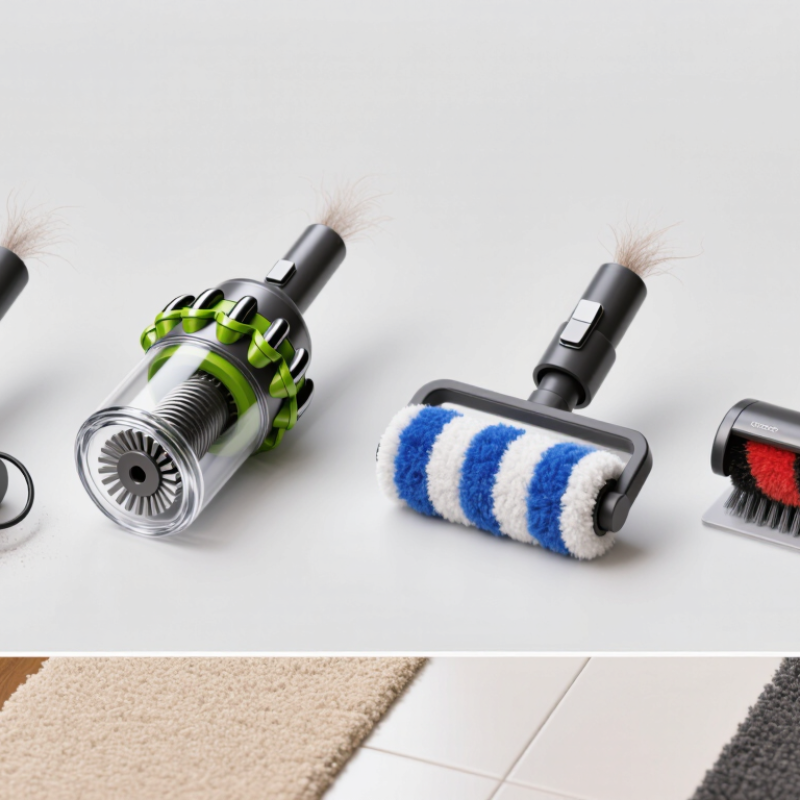
Brush vacuum heads are best classified by how they move dirt. A passive floor head relies on suction and user movement. A turbine head spins its roller using airflow; an electrically driven head uses a motor to agitate carpet fibres. These mechanisms affect hair pickup, grit removal, and contact with hard floors. A useful distinction, though not a perfect one. Roller design and bristle stiffness also matter, so the mechanism alone cannot predict cleaning results.
IEC 62885-2:2021 defines methods for measuring dry vacuum cleaner performance, including dust pickup on carpets and hard floors. It evaluates the complete appliance under controlled conditions, not a brush head as an isolated product. Buyers should therefore treat head-level claims cautiously and check the stated test surface, setup, and result. For a policy benchmark, EU Ecodesign Regulation 666/2013 set a 900 W maximum rated input power and 43 kWh annual energy-consumption limit for covered vacuum cleaners from 2017. These figures describe the appliance, not the brush. Test context matters. Sources: IEC 62885-2:2021; European Commission Regulation (EU) No 666/2013.
Classify Motorized, Air-Driven, Hard-Floor, and Specialty Brush Heads
Motorized brush heads use a dedicated motor to drive the roller, helping lift embedded grit and hair from carpet. They suit homes with thick rugs or heavy foot traffic, but can feel aggressive on delicate flooring. Air-driven heads spin through suction alone. They are lighter and simpler, though roller speed can drop when airflow is restricted. Check the roller width and height adjustment, not just the head’s appearance.
Hard-floor heads often use soft bristles or a padded roller to collect fine dust without scattering it across tile or sealed wood. A small test on an inconspicuous patch is sensible. Grit can still scratch a finish. Specialty heads solve narrower tasks: compact powered tools reach stair treads, while upholstery brushes work around seams and cushions. Fit matters most. There is no perfect head.
Global demand gives buyers useful context, but not a performance guarantee. Grand View Research estimated the global vacuum cleaner market at USD 13.9 billion in 2023 and projected 9.9% annual growth from 2024 to 2030 in its Vacuum Cleaner Market Size, Share & Trends Analysis Report. That growth reflects broad product demand, not proof that one brush design cleans every surface best. Compare head type with flooring, debris, and maintenance needs. Hair wrap remains a real nuisance, even on well-designed rollers.
Match Bristle Design to Carpet Pile, Hard Floors, and Debris Type
Choosing a brush vacuum head starts with the floor, not the motor rating. On hard floors, soft, closely spaced bristles lift fine dust while reducing scratches on sealed surfaces. A fluffy roller can capture crumbs, but oversized pieces may be pushed ahead instead. For tile grout or textured stone, a mixed-bristle head reaches shallow grooves more reliably than a very soft roller. Check that grit does not remain trapped beneath the head’s edges. Small detail. It matters.
Carpet needs a different balance. Short, firm bristles can agitate low-pile rugs and loosen sand near the backing. On dense, high-pile carpet, an adjustable head or gentler brush may prevent drag and tangled fibers. Hair and threads wrap around many brush rolls, so inspect the end caps and choose a design that is easy to clear. Large cereal crumbs need open channels and enough clearance; fine, powdery dust needs closer contact. These choices are not absolute. Floor finishes and debris affect results, and a head that works well in one room may scatter dust in another. Test slowly on an inconspicuous patch, then reassess.
Check Common 32 mm and 35 mm Neck Sizes Against Brand-Specific Fit Standards
2026 Top Brush Vacuum Head Types for Global Buyers
Check Common 32 mm and 35 mm Neck Sizes Against Brand-Specific Fit Standards
Brush vacuum heads often use 32 mm or 35 mm neck connections, but the number alone does not guarantee a fit. Manufacturers may measure the neck differently or use a collar, taper, or locking tab. Check whether the stated diameter refers to the tube’s outside width or the head’s socket opening. A ruler can help, though calipers give a more reliable reading.
Small differences matter. Measure the connection at its widest point, then compare its shape and insertion depth with the vacuum’s existing attachment. A round 32 mm neck may slide into a plain socket but fail to engage a locking feature. Some heads also need a specific adapter. Check the product specifications or ask the supplier to confirm compatibility for your exact model, rather than relying on diameter alone.
Fit should feel secure without forcing the parts together. A loose connection can leak airflow, while an overly tight one may be difficult to remove or could stress the plastic. Test the head gently before cleaning a large area. If the measurement is close, verify the tolerance with the manufacturer. This step is easy to overlook, and it can still leave uncertainty when specifications are incomplete.
