top of page

Call Ahead! 262.242.1050

ask for an appointment with Dave or Emily!

​

​

China Best Portable Coffee Grinder for Camping?

Choosing the China Best Portable Coffee Grinder for Camping starts with a simple question: will it make good coffee without becoming a burden in your pack? At a quiet campsite, the difference is tangible. You may be grinding beans beside a small stove, with cold fingers and limited counter space. A grinder that is compact, stable, and easy to adjust can make that routine smoother.

This guide explores what to look for in a Portable Coffee Grinder For Camping, including burr design, grind settings, capacity, weight, and ease of cleaning. Manual models need no battery, while electric options can save effort but add charging needs. Neither is automatically better. Consider how you travel, how many cups you make, and whether you prefer pour-over, French press, or another brewing method. Small details matter.

When comparing products from Chinese manufacturers and brands, check published specifications, warranty terms, replacement-part availability, and credible user feedback. Where hands-on testing is available, it can reveal issues that product photos cannot, such as a slippery handle or grounds trapped around the burr. A polished listing is not proof of long-term performance. And specifications can be incomplete. This comparison will focus on practical trade-offs rather than declaring one grinder perfect for every trip. A little skepticism helps: even a well-made grinder may feel too slow after a long hike.
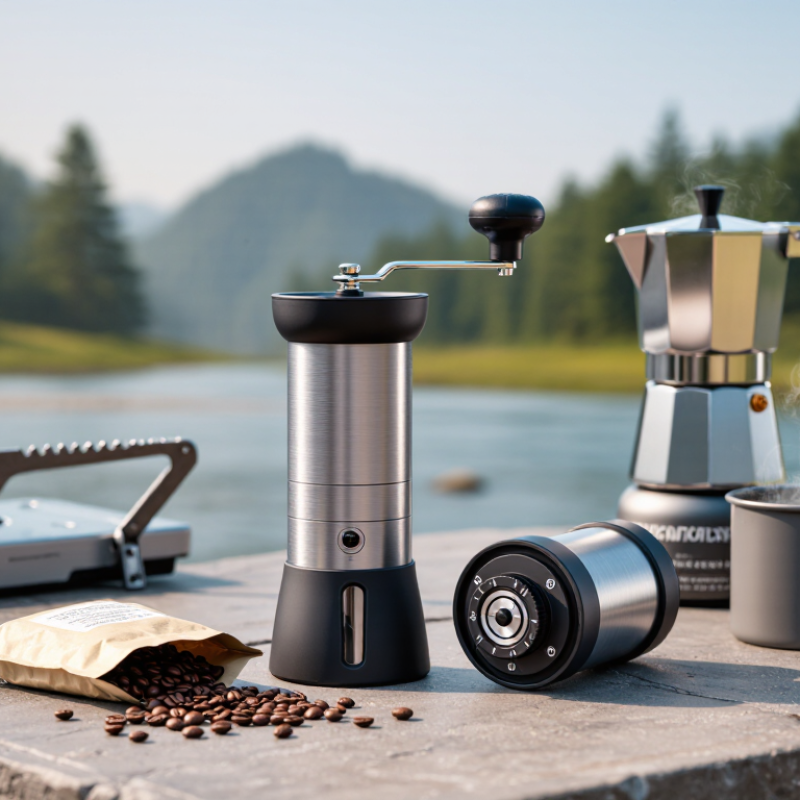
China Best Portable Coffee Grinder for Camping?

Portable Coffee Grinders for Camping: Types and Basic Functions

China Best Portable Coffee Grinder for Camping?

Portable coffee grinders suit different campsites and routines. The Outdoor Industry Association’s 2024 Outdoor Participation Trends Report estimated that 175.8 million Americans participated in outdoor recreation in 2023. For coffee context, the National Coffee Association’s 2024 National Coffee Data Trends report found that 67% of U.S. adults had coffee the previous day. These figures do not measure camping-grinder demand, but they show why portable brewing gear matters to many people.

Manual burr grinders are a common choice when weight and battery life matter. Their hand crank needs no power, and adjustable burrs let campers choose a coarser grind for a French press or a finer one for pour-over. They can take effort, though, especially when grinding beans for several people.

Blade grinders are often compact, but their chopping action produces less even particles. Rechargeable electric grinders save time at camp, yet add charging needs and another item to protect from dust or rain.

Check capacity, grind settings, grip, and how easily the grounds chamber opens. A slippery crank can feel frustrating beside a cold tent at dawn. Weight matters. A removable burr or brush-friendly chamber makes cleanup easier, since leftover grounds can affect the next brew. I would not assume the smallest grinder is the best: a tiny hopper may require several refills. That trade-off is easy to overlook.

Manual and Electric Grinders Available in China

In China, portable coffee grinders generally fall into two options: hand-cranked and rechargeable electric models. Manual grinders need no battery, fit easily beside a small stove, and stay quiet at a dawn campsite. The trade-off is effort. Grinding enough beans for two cups can feel slow, especially with a light roast. Check burr material, adjustment steps, and whether the handle detaches for packing. Small details matter.

The International Coffee Organization’s 2023 Coffee Report and Outlook estimated global consumption at 177 million 60-kilogram bags for 2023/24. That figure describes coffee, not grinder sales, so it cannot show which portable type Chinese campers prefer.

Electric grinders save time when mornings are cold or several people want coffee. They add weight, need charging, and may struggle if their battery runs low. A buying mistake is to judge by speed alone. Try considering cleanup, too: fine grounds can cling inside either design, and outdoor washing is inconvenient.

For a quiet, simple kit, manual may suit; for repeated cups, electric can be easier. Neither choice is perfect.

Key Features for Choosing a Camping Coffee Grinder

A camping coffee grinder should balance grind consistency, weight, capacity, and ease of cleaning. Burr grinders generally produce more even particles than blade grinders, which helps make extraction more predictable. Check whether grind settings cover your brew method: a coarse setting suits a pour-over dripper, while finer grounds may be needed for an espresso-style brewer. Small details matter. A marked adjustment dial is easier to use when the campsite is dim.

Portability involves more than a low number on the scale. A grinder with a narrow body may pack neatly, but a tiny handle can be tiring after several cups. Look for a stable grip, a secure grounds container, and materials that can handle bumps in a backpack. Fine coffee dust gets everywhere. Removable parts make cleaning easier, though loose components are also easier to misplace outdoors.

Coffee remains a daily habit for many people: the National Coffee Association’s 2024 National Coffee Data Trends report found that 67% of U.S. adults had coffee in the previous day. The Outdoor Industry Association’s 2024 participation report counted 175.8 million U.S. outdoor recreation participants in 2023. Neither report measures camping-grinder use, so these figures offer context, not proof of demand. For a real trip, test the grinder at home with your usual beans and brew method; a compact design can still be awkward when your hands are cold.

China Best Portable Coffee Grinder for Camping? Key Features for Choosing a Camping Coffee Grinder

Plan grinder capacity around the amount of coffee you brew. These example doses are calculated using a 1:15 coffee-to-water ratio.

Example: A 300 mL brew calls for about 20 g of coffee at this ratio. When choosing a camping grinder, check that its capacity covers your largest planned dose, and consider grind adjustment, durability, ease of cleaning, and whether you prefer a manual grinder that needs no power.

Comparing Portability, Grind Quality, and Battery Life

A portable coffee grinder earns its place in a camping kit when it fits your routine, not just your backpack. Manual models are usually lighter and do not need charging, but grinding several servings by hand can feel slow on a cold morning. Battery-powered grinders save effort, though their motor and charging cable add weight. Check the grinder’s dimensions against your cook kit; a bulky shape can waste more space than its listed weight suggests.

Grind quality matters for taste and brewing time. Look for consistent particles and clear adjustment steps, especially if you switch between a pour-over cone and a small press. Uneven grounds can make coffee taste both sharp and flat. That is frustrating. Battery life is harder to judge from a single number, since coarse settings and repeated batches use power differently. For a weekend trip, consider how many cups you make each day and whether you can recharge at camp. I would not assume a full battery guarantees the same speed on every grind setting.

Tips: Test the grinder at home before packing it. Time one serving, note the battery level, and check for grounds trapped around the lid. Bring a small brush; it weighs little and helps prevent stale coffee flavors.

Using and Maintaining a Grinder on Camping Trips

A portable hand grinder is useful at camp because it needs no battery and gives you control over grind size. Set it on a flat, dry surface before turning the handle. A mug or small container beneath the grinder keeps grounds out of pine needles and grit. Grind only what you need; freshly ground coffee loses aroma quickly when left exposed to air.

Keep it dry. After brewing, empty the chamber and brush away loose grounds with a small, clean brush. Avoid rinsing the burrs in a stream or packing the grinder while damp, since trapped moisture can encourage corrosion or stale odors. Check the manufacturer’s care instructions before removing parts. A tiny amount of coffee dust may remain, and that is not a disaster. Still, it can affect flavor over time. I would carry a soft cloth and a sealed pouch, but I once forgot the cloth and used a shirt sleeve. It worked, though not especially well. Before packing, make sure the adjustment setting and handle are secure, then store the grinder away from cookware that could knock it around.

China Best Portable Coffee Grinder for Camping? — Using and Maintaining a Grinder on Camping Trips

There is no single best grinder for every camping trip. The comparison below describes typical grinder categories; weight, capacity, and features vary by model. Choose based on your brewing method, trip length, and access to power.

Grinder Type Typical Weight Typical Capacity Power Grind Consistency Camping Suitability Care After Use
Manual burr grinder About 300–600 g Usually 20–40 g of beans per load Hand-operated Generally consistent; many models offer adjustable settings for different brew methods. Well suited to lightweight trips where quiet operation and independence from electricity matter. Brush out loose grounds. Keep the burrs dry and clean according to the maker’s instructions.
Rechargeable electric burr grinder Often 500–900 g Commonly 20–50 g per load Rechargeable battery; charging access may be needed between trips. Typically consistent, with results depending on burr design and adjustment range. Convenient for car camping or trips where charging is available; heavier than most hand grinders. Switch off before cleaning. Remove grounds with a dry brush and follow battery-care guidance.
Compact blade grinder Often 300–600 g Varies; many compact units handle a small batch at a time. Usually mains electricity or a compatible power source. Less uniform than burr grinding; particle size can vary with grinding time. Best where power is available and low cost or compact storage is a priority; less practical for remote trips. Unplug before cleaning. Remove grounds carefully and keep the motor base dry.
Hand-crank grinder with a larger hopper Often 500–900 g May hold enough beans for several servings, depending on the model. Hand-operated Can provide an even grind when equipped with burrs and correctly adjusted. Useful for group camping, though its size and weight may be less suitable for backpacking. Empty the hopper after use and brush away grounds before packing.
bottom of page